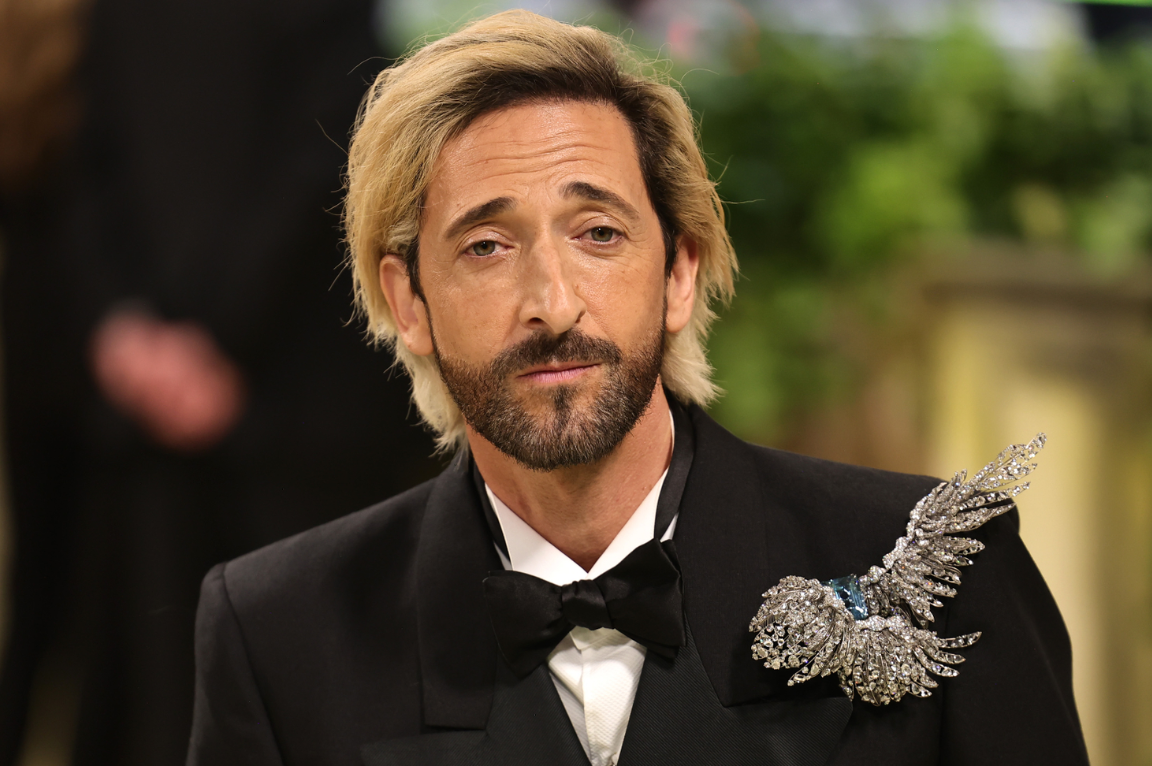
When you think of actors who completely disappear into their roles, Adrien Brody instantly comes to mind. He’s not your typical Hollywood superstar—no loud headlines, no predictable choices. Instead, his career is built on risk, transformation, and performances that linger long after the credits roll.
And if there’s one way to understand his journey, it’s by looking at two defining films: The Pianist and The Brutalist.
The Role That Changed Everything
The Pianist (2002)
Brody’s breakthrough came with The Pianist, in which he portrayed Władysław Szpilman, a Holocaust survivor struggling to survive during World War II.
The performance wasn’t just emotional—it was devastatingly real. He reportedly went through intense physical and emotional preparation to fully embody the character.
At just 29, Brody won the Academy Award for Best Actor, becoming the youngest winner in the category—a record that still stands today.
This wasn’t just a win—it was a moment that instantly cemented his place in cinematic history.
The Quiet Years and Unexpected Choices

After such a massive breakthrough, many expected Brody to dominate mainstream Hollywood.
But instead, he chose a different path.
He explored indie films, experimental roles, and even stepped away at times to focus on personal passions like painting. His career wasn’t about staying visible—it was about staying authentic.
The Comeback That No One Saw Coming
The Brutalist (2024)
Fast forward to The Brutalist, and Brody once again delivers a performance that critics can’t stop talking about.
In the film, he plays László Tóth, a Holocaust survivor and architect trying to rebuild his life in post-war America.
The role mirrors the emotional depth of The Pianist but adds layers of ambition, trauma, and identity in a completely different setting.
History Repeats—But Bigger
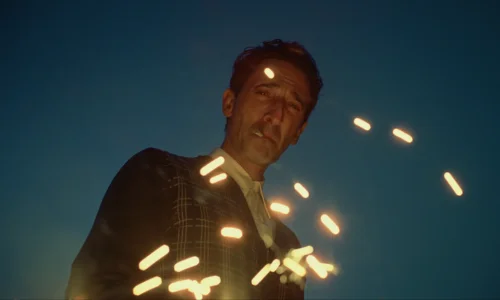
More than two decades after his first Oscar, Brody achieved something rare—he won Best Actor again for The Brutalist.
This wasn’t just a comeback—it was a full-circle moment.
From a young actor shocking the world to a seasoned performer proving his staying power, Brody showed that talent doesn’t fade—it evolves.
Why These Two Films Matter So Much
Both The Pianist and The Brutalist explore survival—but in very different ways.
One is about enduring war and loss
The other is about rebuilding identity and purpose
Yet, in both, Brody brings an intensity that feels almost too real to be acting.
That’s his signature.
More Than Just Awards
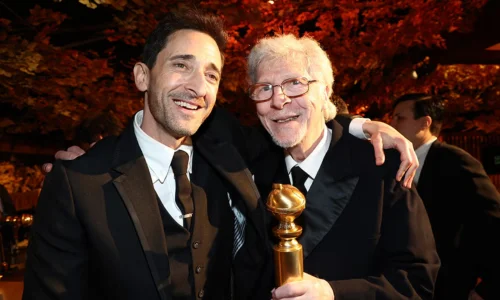
While awards are impressive, they don’t fully define Adrien Brody.
What truly sets him apart is his willingness to take risks, disappear into roles, and prioritize storytelling over stardom.
He’s worked across genres—from historical dramas to series like Peaky Blinders and Succession—proving his range time and again.
The Legacy Is Still Unfolding
Adrien Brody isn’t just an Oscar-winning actor—he’s a storyteller who chooses depth over hype.
From The Pianist to The Brutalist, his journey reflects resilience, reinvention, and an unwavering commitment to his craft. And if these two performances are anything to go by, one thing is clear:
He’s not done surprising us yet.