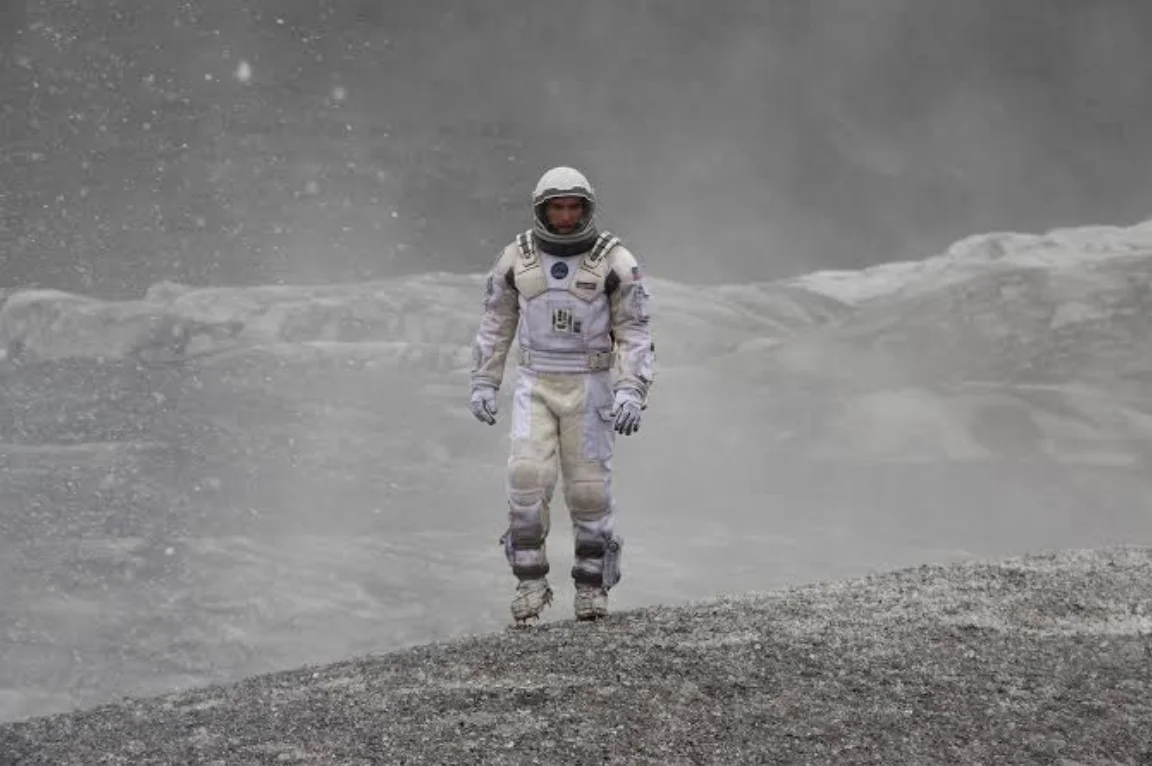
Ever watched Interstellar and thought, “Yeah, I got it”?
No, you didn’t. And honestly, none of us did the first time.
With Christopher Nolan back in the spotlight thanks to his latest buzz around The Odyssey, fans are revisiting Interstellar and discovering a whole galaxy of hidden details that completely change how you see the film.
What Is Interstellar Movie About?
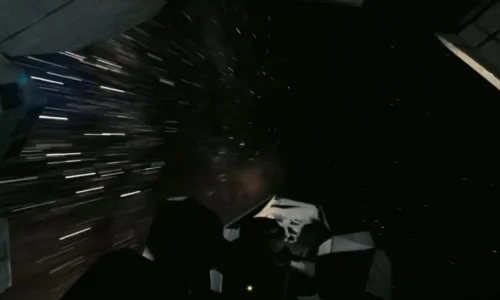
At its core, Interstellar is about survival, love, and time.
Earth is dying, and a group of astronauts travels through a wormhole to find a new home for humanity. But what makes it unforgettable is how it blends science with emotion, especially the bond between Cooper and Murph.
Fascinating Hidden Details that Make this Sci-fi Epic Even More Brilliant
The Dust Isn’t Just a Special Effect

One of the first things you’ll notice is the endless dust covering homes, farms, and entire towns.
It isn’t there simply to make Earth look gloomy.
Christopher Nolan based these scenes on the real-life Dust Bowl of the 1930s, one of America’s worst environmental disasters. Even the elderly people sharing memories during the opening scenes were inspired by real interviews from Ken Burns’ documentary The Dust Bowl.
Right from the beginning, Nolan reminds us that Interstellar isn’t just about space. It’s about humanity’s struggle to survive.
Murph’s Watch Was the Biggest Clue All Along
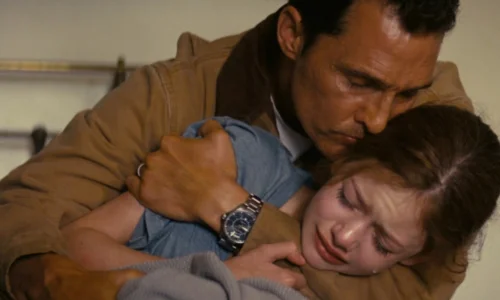
The watch Cooper gives Murph feels like an emotional goodbye gift.
In reality, it’s the most important object in the entire movie.
After entering the tesseract, Cooper uses gravity to manipulate the watch’s second hand, sending quantum data to Murph in Morse code.
The incredible part?
The answer to saving humanity was literally sitting inside Murph’s bedroom from the very beginning.
Nolan hides his biggest plot twist in plain sight.
Every Planet Represents a Human Emotion
At first glance, the planets seem like random destinations.
They’re not.
Each one symbolizes a different human trait.
- Miller’s Planet represents how time slips away before we even realize it.
- Dr. Mann’s Planet exposes fear, selfishness, and the instinct to survive at any cost.
- Edmunds’ Planet symbolizes hope and the possibility of a fresh beginning.
Dr. Mann Was Never the Typical Villain
Most blockbuster villains crave power.
Dr. Mann simply wanted to live.
After years of isolation, he abandoned logic and chose survival over honesty. His betrayal wasn’t driven by evil but by desperation.
It’s one of Nolan’s most realistic characters because many people can’t honestly say they’d make different choices after spending years completely alone.
The Docking Scene Is Almost Perfect Filmmaking

Ask any Interstellar fan about their favorite scene, and many will mention the spinning docking sequence.
The visuals are stunning.
The music is unforgettable.
But here’s what makes the scene truly remarkable.
Everything happens because Cooper trusts mathematics instead of panic.
Hans Zimmer’s powerful score gradually builds tension while the camera keeps viewers locked inside the action instead of relying on constant cuts or shaky visuals.
It’s one of the greatest suspense sequences ever filmed.
Those Books Weren’t Random Props
Take another look at Murph’s bookshelf.
Every single book matters.
Books represent human knowledge, history, and the idea that our greatest discoveries are passed from one generation to another.
Ironically, that same bookshelf later becomes the bridge between Cooper and Murph across dimensions.
Sometimes the smallest movie prop becomes the biggest storytelling device.
Gargantua Is Scientifically Accurate
The black hole, Gargantua, wasn’t just CGI magic.
Physicist Kip Thorne worked closely on the film, making it one of the most scientifically accurate depictions ever. In fact, the visuals were so precise that they contributed to real scientific research.
So yeah… that wasn’t just pretty—it was real science flexing.
The Ending Is Easier Than You Think
If the ending left your head spinning, you’re not alone.
Many viewers believe Cooper travels through time.
That’s not exactly what happens.
Inside the tesseract, Cooper exists in a five-dimensional space where he can observe every moment inside Murph’s bedroom.
He isn’t changing history.
He’s fulfilling it.
The mysterious “ghost” Murph believed in as a child was actually her father trying to communicate across dimensions.
It’s one of the most emotional reveals in modern science fiction.
The Interstellar Movie Cast Was Perfectly Chosen
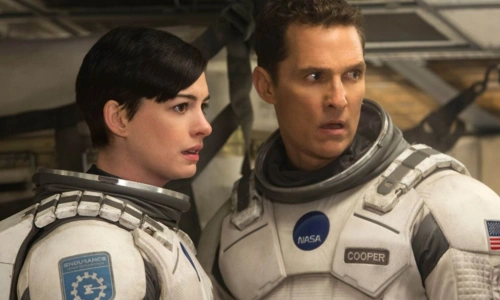
The interstellar movie cast played a huge role in making the film unforgettable:
- Matthew McConaughey as Cooper
- Anne Hathaway as Brand
- Jessica Chastain as Murph
Every performance hit hard—but McConaughey’s emotional scenes? Still wreck us.
Will There Be an Interstellar 2?
Probably not.
Nolan rarely does sequels, and Interstellar was designed as a complete story. But with renewed interest (thanks to his new projects), fans are definitely hoping for something maybe not a sequel, but at least a spiritual successor.
You Need to Rewatch This ASAP
If you haven’t revisited Interstellar recently, now is the time.
With all these details and deeper meanings, it’s basically a different movie the second time around. And trust this: next time you watch it, you’ll catch things that will blow your mind all over again.