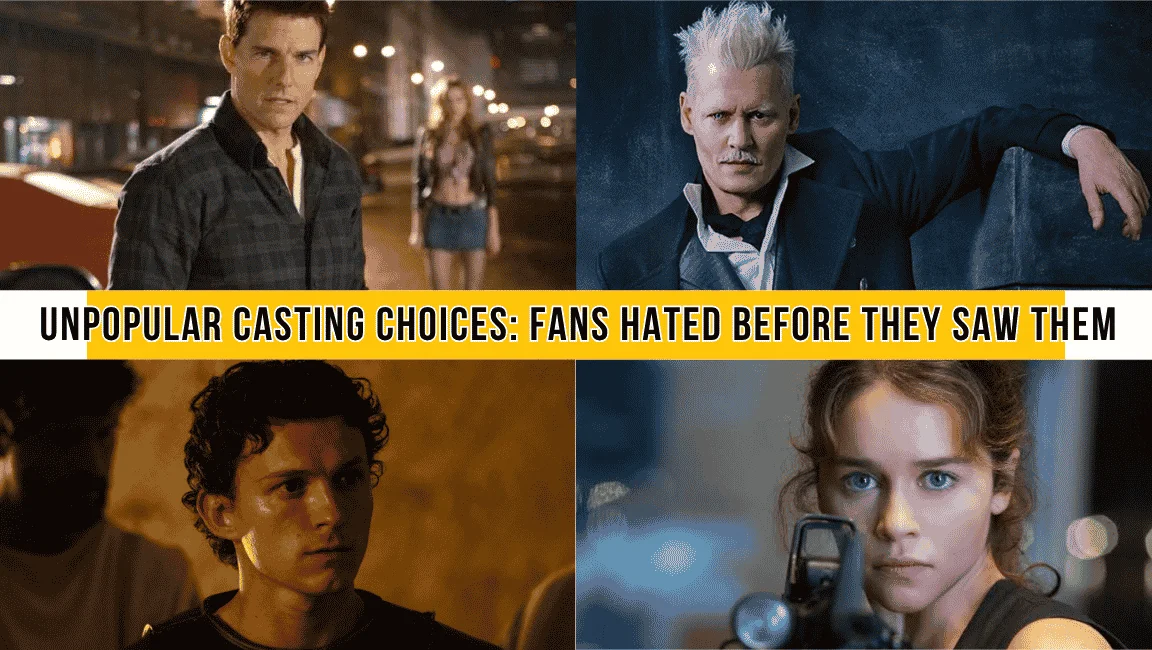
A casting announcement can change the mood around a movie before cameras even roll. Fans compare actors with the characters they already know. Book readers picture one face. Franchise followers remember another. And sometimes, the person Hollywood chooses simply doesn’t match the image audiences had in their heads.
These four unpopular casting choices sparked questions for very different reasons. Some faced criticism over appearance, some over franchise expectations, and others became controversial for reasons far beyond the performance itself.
1. Tom Cruise as Jack Reacher
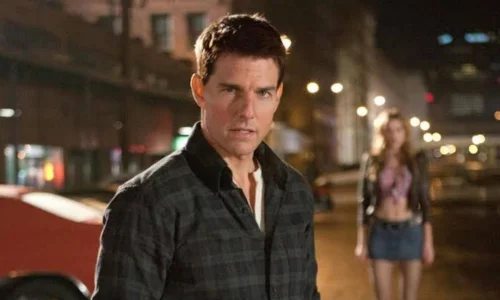
When Tom Cruise took on the role of Jack Reacher in the 2012 movie, fans of Lee Child’s novels immediately noticed the biggest difference between the actor and the character.
Reacher is described in the books as an exceptionally tall, broad and physically imposing former military investigator. Cruise, meanwhile, is considerably shorter. That mismatch became a major point of criticism among readers. Even Lee Child later acknowledged that fans had a legitimate reason to question the casting.
Cruise nevertheless made the role his own across Jack Reacher and Jack Reacher: Never Go Back.
2. Johnny Depp as Gellert Grindelwald
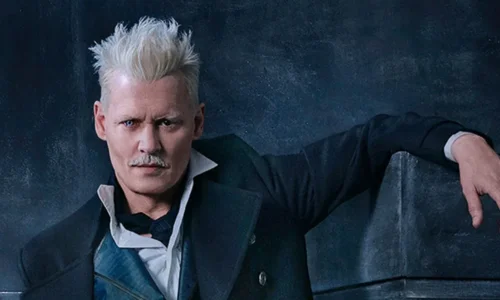
Johnny Depp’s casting as Gellert Grindelwald in the Fantastic Beasts franchise created a very different kind of controversy.
Depp appeared as Grindelwald in Fantastic Beasts: The Crimes of Grindelwald after the character was briefly played by another actor in the first film. But by the time the sequel arrived, public attention surrounding Depp’s personal life had become inseparable from discussion of the casting.
J.K. Rowling defended the decision to keep Depp in the franchise in 2017, saying the filmmakers were comfortable with the casting.
Warner Bros. later confirmed that Depp would leave the role after the release of Fantastic Beasts: The Crimes of Grindelwald. Mads Mikkelsen subsequently took over as Grindelwald in The Secrets of Dumbledore.
The debate became tied to a much larger question about whether a major franchise should retain an actor amid intense public controversy.
3. Emilia Clarke as Sarah Connor
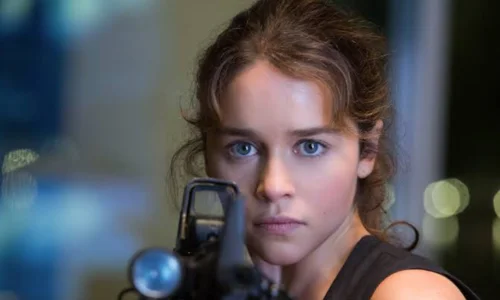
Taking over an iconic role is never easy. Emilia Clarke stepped into the shoes of Sarah Connor for Terminator Genisys, a character strongly associated with Linda Hamilton’s performance in the original Terminator films.
That meant Clarke wasn’t simply playing a famous character. She was stepping into a role that already had a deeply established screen identity. Paramount ultimately chose Clarke for the part after considering several actresses, with the casting announced in late 2013.
The reaction to Genisys became mixed, with criticism aimed at the movie itself as well as several of its creative choices. That makes Clarke’s casting more interesting than a simple “wrong actress” narrative.
She brought a different energy to Sarah Connor, coming into the role after becoming globally known as Daenerys Targaryen on Game of Thrones.
4. Tom Holland in Christopher Nolan’s The Odyssey
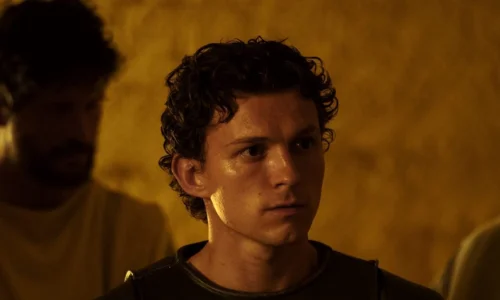
Tom Holland plays Telemachus in Christopher Nolan’s The Odyssey, alongside Matt Damon, Anne Hathaway, Robert Pattinson and Zendaya. The film arrived in theaters in July 2026.
Before release, online discussion around the movie became unusually intense. Much of the criticism focused on Nolan’s casting choices and his modern approach to adapting Homer’s epic.
Holland’s involvement became part of that wider conversation rather than an isolated backlash against the actor himself. Nolan eventually pushed back on the online criticism, calling it “irrelevant” before audiences had actually seen the finished film.
And once the movie arrived, the conversation shifted toward the film itself, including its performances, visual approach and interpretation of the ancient story. The Odyssey went on to become a major theatrical release, with the Guardian reporting a $264 million worldwide opening weekend.
The Bigger Story Behind These Casting Choices
Not every controversial casting decision deserves the same label.
- Tom Cruise’s Reacher controversy was largely about physical resemblance to a literary character.
- Emilia Clarke’s Sarah Connor casting faced the challenge of following an iconic predecessor.
- Johnny Depp‘s Grindelwald controversy became tied to off-screen issues surrounding the actor.
- And Tom Holland’s Odyssey casting became part of a much larger online debate about Nolan’s interpretation and ensemble.
That difference is exactly what makes these examples worth revisiting. Hollywood casting isn’t just about finding an actor who can play a part. It’s about managing audience expectations before the first frame even appears on screen.
Frequently Asked Questions
What are unpopular casting choices in Hollywood?
They are casting decisions that attract significant criticism, skepticism or controversy from audiences before or around a film’s release. The reasons can range from physical resemblance to franchise expectations or off-screen controversies.
Why was Tom Cruise’s Jack Reacher casting controversial?
Book fans questioned Cruise because the actor did not physically match Lee Child’s description of Reacher as an exceptionally tall and broad character. Child later acknowledged that readers had a valid reason to question the casting.
Who replaced Johnny Depp as Grindelwald?
Mads Mikkelsen replaced Johnny Depp as Gellert Grindelwald in Fantastic Beasts: The Secrets of Dumbledore.
Who played Sarah Connor in Terminator Genisys?
Emilia Clarke played Sarah Connor in Terminator Genisys, taking on a role previously made famous by Linda Hamilton.
Who does Tom Holland play in The Odyssey?
Tom Holland plays Telemachus, the son of Odysseus, in Christopher Nolan’s 2026 adaptation of Homer’s The Odyssey.
The most interesting casting debates aren’t always about whether an actor is talented enough for the job. Sometimes it’s about whether audiences can let go of the version they already imagined.
Tom Cruise, Johnny Depp, Emilia Clarke and Tom Holland each found themselves at the center of very different casting conversations. And that’s the real Hollywood lesson: a casting choice can look completely different once the audience finally sees the movie.