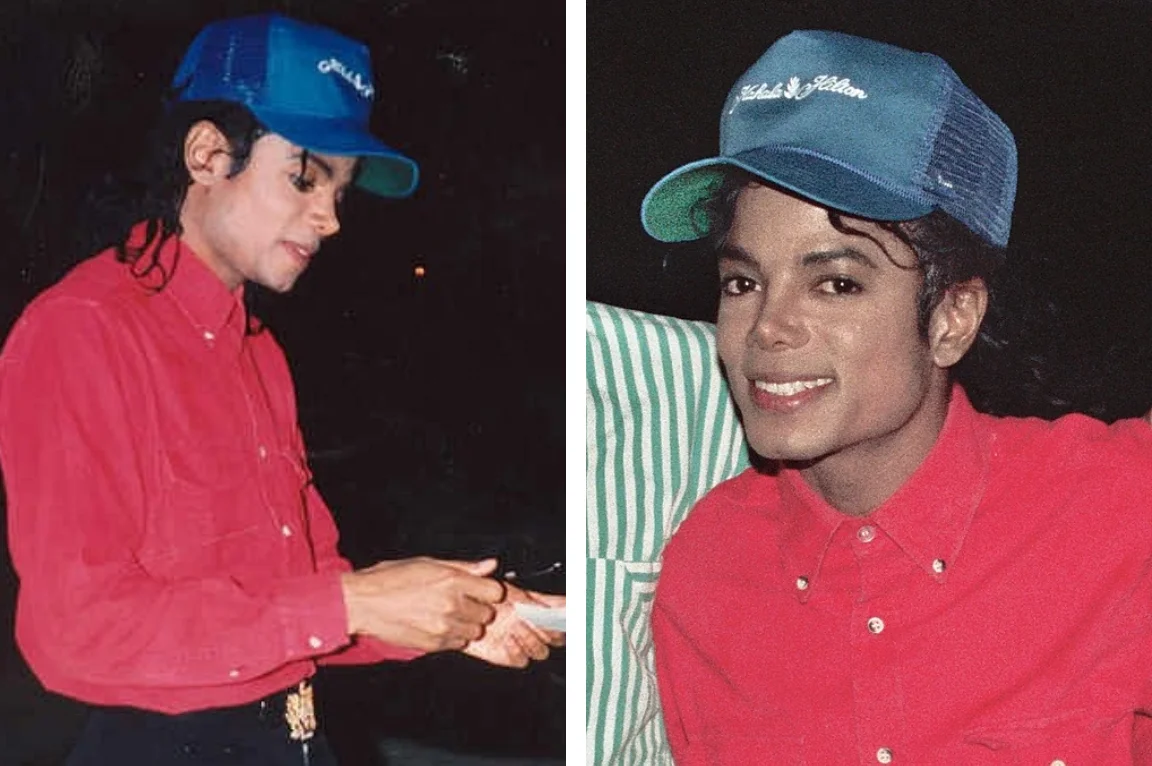
Michael Jackson was not just a musician. He was a cultural force — a once-in-a-generation talent whose voice, movement, and vision reshaped the entire landscape of popular music. He was the King of Pop, one of the greatest entertainers who ever lived, and one of the most fascinating, complicated, and thoroughly dissected human beings of the 20th century.
Whether you have loved his music for decades, just discovered Thriller for the first time, or are trying to understand why the world is still talking about him, this is the most complete guide to the life, career, controversies, death, and legacy of Michael Joseph Jackson.
Michael Jackson at a Glance
| Detail | Information |
| Full Name | Michael Joseph Jackson |
| Date of Birth | August 29, 1958 |
| Date of Death | June 25, 2009 |
| Age at Death | 50 years old |
| Birthplace | Gary, Indiana, USA |
| Place of Death | Ronald Reagan UCLA Medical Center, Los Angeles, CA |
| Cause of Death | Acute propofol and benzodiazepine intoxication (ruled homicide) |
| Nationality | American |
| Father | Joseph “Joe” Walter Jackson |
| Mother | Katherine Esther Jackson (née Scruse) |
| Siblings | Rebbie, Jackie, Tito, Jermaine, La Toya, Marlon, Randy, Janet (9 surviving; Brandon, Marlon’s twin, died at birth) |
| Spouses | Lisa Marie Presley (1994–1996); Debbie Rowe (1996–1999) |
| Children | Prince (Michael Jr.), Paris, Bigi (formerly known as “Blanket”) |
| Net Worth at Death | ~$500 million in debt (but $567M+ in assets) |
| Estate Value (2025) | ~$2–2.5 billion |
| Known For | Thriller, Moonwalk, King of Pop, Jackson 5, Neverland Ranch |
| Record Label | Motown (early career); Epic Records (solo) |
| Grammy Awards | 13 wins out of 38 nominations |
Where Was Michael Jackson Born?
Michael Joseph Jackson was born on August 29, 1958, in Gary, Indiana — a working-class steel town about 25 miles south of downtown Chicago. He was the eighth of ten children born to Joseph “Joe” Jackson and Katherine Esther Jackson (née Scruse). One child, Brandon (Marlon’s twin brother), died shortly after birth, leaving nine surviving children.
His father worked as a crane operator in a steel mill, while his mother worked at a Sears department store. The family lived in a tiny two-bedroom house at 2300 Jackson Street — coincidentally named after a U.S. president. Music was everywhere in the Jackson home: Joe played guitar in a local R&B band, and Katherine sang and played clarinet and piano.
The entire family — two parents and nine children — shared that small two-bedroom home. Nine children in a two-bedroom house full of music, grueling work routines, and a strict father were the beginnings of one of entertainment’s greatest families.
Personal Life
Marriage to Lisa Marie Presley (1994–1996)
In August 1994, Jackson announced that he had married Lisa Marie Presley, daughter of rock icon Elvis Presley. The union proved to be short-lived, as they divorced in 1996. The marriage was among the most scrutinized in entertainment history. They married in the Dominican Republic in May 1994. That September, the newlyweds appeared on stage together at the MTV Video Music Awards and kissed — a moment that registered as one of the most talked-about in VMAs history.
Many observers speculated that the marriage was a calculated image move in the wake of the 1993 child abuse allegations. Lisa Marie, however, maintained throughout her life that her feelings for Michael were genuine. She died on January 12, 2023, at age 54.
Marriage to Debbie Rowe (1996–1999)
Later in 1996, Jackson wed nurse Debbie Rowe. Jackson and Rowe had two children through artificial insemination: son Michael Joseph Jackson Jr. (born 1997, known as Prince), and daughter Paris Michael Katherine Jackson (born 1998). When Rowe and Jackson divorced in 1999, Michael received full custody of their two children.
Children
Michael Jackson had three children:
- Prince (Michael Joseph Jackson Jr.) — Born February 13, 1997. Now in his late 20s, Prince has stayed largely out of the spotlight and has been involved in philanthropy and business.
- Paris Michael Katherine Jackson — Born April 3, 1998. Paris has pursued a career as an actress and musician, and has been a vocal advocate for mental health awareness. In 2025, she challenged the estate’s legal fee payments in court.
- Bigi Jackson (formerly known as “Blanket” and “Prince Michael II”) — Born February 21, 2002, via an anonymous surrogate. Bigi is the most private of the three children and has largely avoided public life.
The guardianship of his three children was given to his mother, Katherine, or if she was unable or unwilling, to singer Diana Ross.
Who Are Michael Jackson’s Parents and Siblings?
Joe Jackson — The Father
Joseph “Joe” Jackson worked at a steel mill and was known as a strict disciplinarian. After recognizing his children’s musical abilities, he formed the Jackson 5. He reportedly had them rehearse for up to five hours daily, and he would use a switch or belt to punish mistakes.
Michael later acknowledged that his father’s methods were harsh and left lasting psychological scars. Accepting the Grammy Legend Award in 1993, Michael said: “My childhood was taken away from me. There was no Christmas, there were no birthdays, it was not a normal childhood, nor the normal pleasures of childhood. Those were exchanged for hard work, struggle and pain and eventually material and professional success.” Despite the complicated relationship, Joe’s ambition was the engine that launched the most successful entertainment family in American history.
Katherine Jackson — The Mother
Katherine Jackson was the gentler, more nurturing force in Michael’s life. She supported her children’s musical interests, sang with them at home, and was the spiritual anchor of the family. Michael credited his mother throughout his life as a source of unconditional love. When Michael died in 2009, his will specified that his three children should be placed in Katherine’s guardianship, or if she were unable to serve, in the care of singer Diana Ross.
The Siblings
All nine of Michael’s surviving siblings made their mark in music and entertainment:
- Rebbie Jackson — Eldest sibling; solo recording artist
- Jackie Jackson — Member of the Jackson 5
- Tito Jackson — Member of the Jackson 5; guitarist
- Jermaine Jackson — Member of the Jackson 5; solo artist; stayed with Motown when the group moved to Epic
- La Toya Jackson — Solo recording artist and television personality
- Marlon Jackson — Member of the Jackson 5
- Randy Jackson — Joined the Jacksons after Jermaine left; later known as an American Idol judge
- Janet Jackson — The most successful solo sibling; one of the best-selling artists of all time
Education
Michael Jackson never had a conventional childhood education. His life on the road as a performer from the age of five meant that formal schooling was frequently interrupted. He received some instruction from tutors while on tour. Despite the lack of a traditional academic path, Michael was an intensely self-educated man — a voracious reader, a student of film history, a devoted learner of musical composition, and a sharp businessman who understood the power of intellectual property far ahead of his peers.
He famously attended no universities, but delivered a guest lecture at Oxford University in 2001, where he spoke about children’s rights and the importance of parenting.
Neverland Ranch
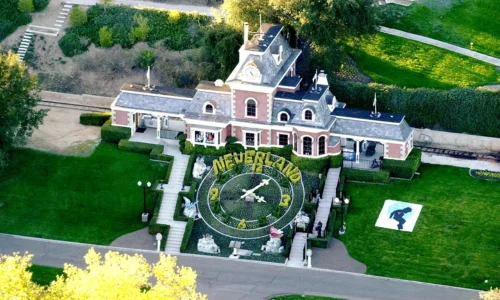
Michael Jackson purchased Neverland Ranch in 1987 for approximately $19.5 million. After acquiring the 2,700-acre property in Los Olivos, California, Jackson proceeded to build an elaborate fantasy land complete with an amusement park, exotic animals, and a working train.
The main residence was a 12,600-square-foot French-Normandy-style mansion with five bedrooms, eight bathrooms, a dance studio, and a 50-person movie theater. The estate also had its own zoo, Ferris wheel, go-kart track, and fire department. Michael named it Neverland — a reference to J.M. Barrie’s Peter Pan and a boy who never grows up, a reflection of Michael’s feelings about his own lost childhood.
Elizabeth Taylor got married there in 1991. Following the child molestation allegations, Neverland became a shadow of its former self. In 2015, the property was first listed for sale for $100 million. In December 2020, billionaire Ron Burkle finally bought it for $22 million — a fraction of its original asking price. It was renamed Sycamore Valley Ranch by subsequent owners.
Career: From Gary to Global Icon
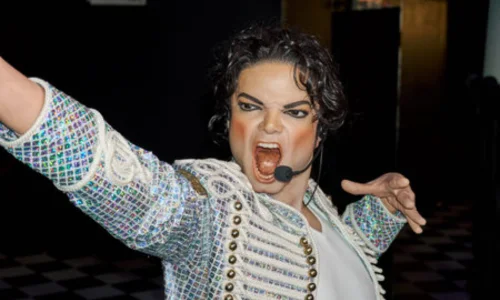
The Jackson 5 (1964–1975)
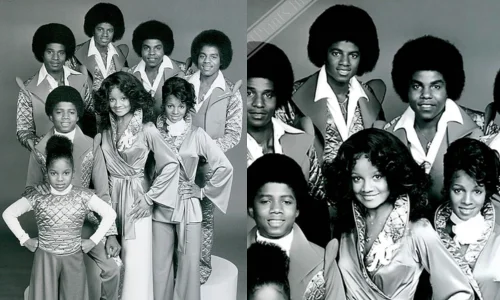
By the early 1960s, the older Jackson boys — Jackie, Tito, and Jermaine — had begun performing around Gary. By 1964, Michael and Marlon had joined in. Michael, though the youngest in the group, quickly became its focal point.
From the age of five, Michael’s amazing talent showed itself. His dancing and stage presence caused him to become the focus of the group. His older brother Jackie said: “It was sort of frightening. He was so young. I don’t know where he got it. He just knew.”
The group performed at amateur shows and talent contests throughout the Midwest before catching the attention of Motown Records in 1968. Motown president Berry Gordy signed them in 1969. In January 1970, “I Want You Back” became the Jackson 5’s first single to reach number one on the Billboard Hot 100, remaining at the top for four weeks. Three additional Motown singles — “ABC”, “The Love You Save”, and “I’ll Be There” — also reached number one.
After signing with Motown, the Jackson family relocated to Los Angeles.
The Jackson 5 left Motown in 1975, signing with Epic Records and renaming themselves the Jacksons. Their younger brother Randy joined the band around this time, while Jermaine remained with Motown to pursue a solo career.
Michael’s Early Solo Career (1972–1978)
Even while performing with the Jackson 5, Michael was building a solo career. He released his debut solo album at age 13 with Got to Be There (1971), making the charts with the title track. He had his first solo No. 1 single with the title track from his sophomore album Ben (1972).
In 1977, Jackson moved to New York City to star as the Scarecrow in The Wiz, a musical film directed by Sidney Lumet and featuring Diana Ross. The film was a box-office failure. Its score was arranged by Quincy Jones, who later produced three of Jackson’s solo albums.
Off the Wall (1979) — The Breakthrough
Working with producer Quincy Jones, Michael delivered his first truly groundbreaking solo album in 1979. Off the Wall was a funk, soul, and disco-inflected masterpiece that produced massive hits including “Don’t Stop ‘Til You Get Enough”, “Rock with You”, and “She’s Out of My Life”. The album sold over 20 million copies worldwide and established Michael as a serious solo force — but it was only the beginning.
Thriller (1982) — The Greatest Album of All Time
Nothing in the history of recorded music matches what Michael Jackson and Quincy Jones created in 1982 with Thriller. Michael wanted to create the biggest-selling pop album ever. Ever since he was young, he studied composition and was inspired to create Thriller like Tchaikovsky’s Nutcracker Suite, where every song was a massive hit. He fulfilled his dream.
The album is the best-selling album of all time, with over 70 million copies sold worldwide. It produced seven Billboard Hot 100 top-10 singles — an unprecedented feat — including:
- “Wanna Be Startin’ Somethin'”
- “The Girl Is Mine” (with Paul McCartney)
- “Thriller”
- “Beat It” (featuring Eddie Van Halen)
- “Billie Jean”
- “Human Nature”
- “P.Y.T. (Pretty Young Thing)”
At the 26th Annual Grammy Awards, Jackson received 12 nominations and won eight awards, including Album of the Year. The album was later inducted into the Grammy Hall of Fame.
The “Thriller” music video, directed by John Landis and running nearly 14 minutes, is still considered the greatest music video ever made. It featured Michael transforming into a zombie and leading a now-legendary dance sequence that changed the way the world thought about music videos forever.
Bad (1987)
Bad was Jackson’s third solo collaboration with Quincy Jones and the follow-up to Thriller. It became the first album in history to produce five consecutive number-one singles in the United States:
- “I Just Can’t Stop Loving You”
- “Bad”
- “The Way You Make Me Feel”
- “Man in the Mirror”
- “Dirty Diana”
The Bad World Tour (1987–1989) became the highest-grossing concert tour of its time, selling out 123 concerts across 15 countries to an audience of approximately 4.4 million people. His Wembley Stadium concert in London, attended by Princess Diana and Prince Charles, became one of the most famous live performances of the 20th century.
Dangerous (1991)
Dangerous marked a creative transition, moving away from Quincy Jones and collaborating with Teddy Riley on a New Jack Swing sound. The album opened with “Black or White”, which debuted at number one in 20 countries. Other hits included “Remember the Time”, “In the Closet”, and “Heal the World”.
The Dangerous World Tour was interrupted in 1993 when Jackson canceled dates amid child molestation allegations. The album still sold more than 32 million copies worldwide.
HIStory (1995)
Facing intense media scrutiny, Jackson responded with HIStory: Past, Present and Future, Book I — a two-disc set, with one disc of greatest hits and one disc of all-new material. Standout new tracks included the duet “Scream” with sister Janet Jackson, “You Are Not Alone” (the first song to debut at No. 1 on the Billboard Hot 100), and “Earth Song”.
To promote the album, Jackson famously erected 30-foot steel statues of himself along major European rivers. The accompanying HIStory World Tour (1996–1997) grossed $165 million.
Invincible (2001)
Jackson’s final studio album during his lifetime came out in 2001 after a long gap. Invincible featured the single “You Rock My World” and went platinum in multiple countries, despite a famously fractured relationship between Jackson and his label, Sony. Jackson publicly accused Sony chairman Tommy Mottola of racism and exploitation.
Michael Jackson’s Dance Moves
No discussion of things about Michael Jackson is complete without celebrating his dancing — widely considered the most influential in the history of popular music.
The Moonwalk
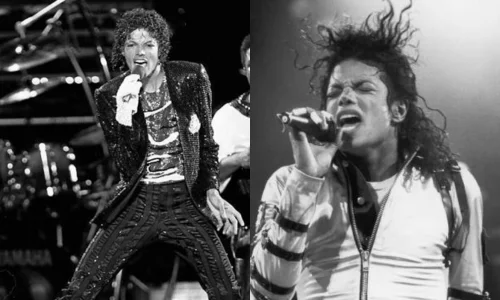
On March 25, 1983, Jackson reunited with his brothers for Motown 25: Yesterday, Today, Forever, an NBC television special. Jackson’s solo performance of “Billie Jean” earned him his first Emmy Award nomination. Wearing a rhinestone-studded glove, he debuted the moonwalk — taught to him three years earlier by Jeffrey Daniel — which became his signature dance move.
His performance received widespread acclaim: Rolling Stone’s Mikal Gilmore called it “extraordinary”, and The New York Times critic Anna Kisselgoff praised the timing and technique of his dancing.
The moonwalk gives the illusion of gliding backward while appearing to walk forward. It immediately entered pop culture as the most imitated move in history and remains synonymous with Michael Jackson to this day.
The Robot
Jackson also popularized the “robot dance” after using the move during a 1973 performance of the song “Dancing Machine” on The Mike Douglas Show. The robot involves isolating different parts of the body and moving them with mechanical precision, creating the illusion of being a machine.
The Anti-Gravity Lean
In the “Smooth Criminal” video and stage show, Jackson and his dancers appear to defy gravity by leaning forward at a 45-degree angle from the floor. This was achieved through specially designed ankle braces patented by Jackson himself (US Patent No. 5,255,452).
The Spin and Toe Stand
Jackson’s pirouettes, finishing in a precise toe stand, were borrowed from classical ballet and integrated into pop performance for the first time. Entire generations of dancers, from Usher to Chris Brown to BTS, have cited Jackson’s technique as the foundation of their own style.
Michael Jackson’s Top Songs
| Rank | Song | Album | Year | Peak Chart Position |
| 1 | “Billie Jean” | Thriller | 1983 | #1 (7 weeks) |
| 2 | “Thriller” | Thriller | 1982 | #4 |
| 3 | “Beat It” | Thriller | 1983 | #1 |
| 4 | “Don’t Stop ‘Til You Get Enough” | Off the Wall | 1979 | #1 |
| 5 | “Man in the Mirror” | Bad | 1988 | #1 |
| 6 | “Black or White” | Dangerous | 1991 | #1 (7 weeks) |
| 7 | “Bad” | Bad | 1987 | #1 |
| 8 | “The Way You Make Me Feel” | Bad | 1987 | #1 |
| 9 | “Rock with You” | Off the Wall | 1979 | #1 |
| 10 | “You Are Not Alone” | HIStory | 1995 | #1 (first song ever to debut at #1) |
| 11 | “Smooth Criminal” | Bad | 1987 | #7 |
| 12 | “Human Nature” | Thriller | 1983 | #7 |
| 13 | “P.Y.T.” | Thriller | 1982 | #10 |
| 14 | “Remember the Time” | Dangerous | 1992 | #3 |
| 15 | “Earth Song” | HIStory | 1995 | #1 (UK) |
Complete Discography
Studio Albums (Solo)
| Year | Album | Label |
Certified Sales |
| 1972 | Got to Be There | Motown | 1M+ |
| 1972 | Ben | Motown | 2M+ |
| 1973 | Music & Me | Motown | 500K+ |
| 1975 | Forever, Michael | Motown | 500K+ |
| 1979 | Off the Wall | Epic | 20M+ |
| 1982 | Thriller | Epic | 70M+ (best-selling album of all time) |
| 1987 | Bad | Epic | 35M+ |
| 1991 | Dangerous | Epic | 32M+ |
| 1995 | HIStory: Past, Present and Future, Book I | Epic | 20M+ |
| 2001 | Invincible | Epic | 13M+ |
| 2010 | Michael (posthumous) | Epic | — |
| 2014 | Xscape (posthumous) | Epic | — |
Changing Appearance: Vitiligo, Surgery & Skin Color
Few things about Michael Jackson generated more speculation than his dramatic physical transformation over the decades. As a child and young man, Michael had warm brown skin and a broad nose. By the 1990s, his skin appeared significantly lighter and his facial features had changed markedly.
Jackson consistently and publicly attributed his skin lightening to vitiligo — an autoimmune condition in which the skin loses its pigmentation in irregular patches. His autopsy confirmed a diagnosis of vitiligo. He used makeup to even out his skin tone. He also acknowledged having a rhinoplasty (nose job), which he said was a result of a broken nose after a fall during a dance rehearsal.
He also suffered from lupus, which complicated his skin condition, and significant back problems from years of physically demanding performances.
Despite the medical explanations, speculation and tabloid coverage about skin bleaching followed Michael for the rest of his life and contributed to the complex public narrative surrounding him.
Controversies
Child Molestation Allegations (1993)
In 1993, a 13-year-old boy named Jordan Chandler, whose father was a dentist, alleged that Michael Jackson had sexually abused him during visits to Neverland Ranch. The case became the defining controversy of Jackson’s career. The case was settled out of court, with Jackson reportedly paying the Chandlers $23 million without admitting wrongdoing. No criminal charges were filed at that time.
Criminal Trial (2003–2005)
In 2003, British journalist Martin Bashir’s documentary Living with Michael Jackson aired, showing Jackson holding hands with another young boy and speaking about sharing his bedroom with children. The documentary triggered a new investigation.
Jackson was formally charged with seven counts of child molestation and two counts of administering an intoxicating agent, relating to 13-year-old Gavin Arvizo. The trial began in 2005 and lasted five months. On June 13, 2005, Michael Jackson was acquitted on all counts by a jury. He wept in the courtroom as the verdict was read. He never returned to Neverland Ranch after the trial.
Leaving Neverland (2019)
Even a decade after his death, the controversy was reignited by the 2019 HBO documentary Leaving Neverland, in which two men — Wade Robson and James Safechuck — alleged that Jackson had sexually abused them as children. The documentary sparked fierce debate globally, with fans and critics deeply divided. The Jackson estate denied all allegations and pursued legal action against the filmmakers. The debate around Michael Jackson’s legacy and these allegations remains ongoing to this day.
Financial Controversies
Jackson’s spending was as legendary as his earnings. Maintaining his lifestyle reportedly cost as much as $50 million per year. Neverland Ranch alone required millions annually in upkeep. He spent tens of millions on art, antiques, luxury cars, and collectibles, along with significant payouts tied to legal settlements.
How Did Michael Jackson Die?
The Final Days: “This Is It”
In early 2009, Michael Jackson announced a 50-concert residency at London’s O2 Arena, titled “This Is It”. It would be his first major concerts in over a decade. All 50 dates sold out within hours. The concerts were scheduled to run from July 2009 through March 2010.
Jackson threw himself into rehearsals at the Staples Center in Los Angeles, working with choreographer Kenny Ortega. But behind the scenes, he was in serious physical distress — exhausted, unable to sleep, and increasingly dependent on powerful sedatives.
The Night of June 24–25, 2009
Michael Jackson reportedly begged his doctor for Propofol — which he called “milk” — saying “Please, please, give me some milk so that I can sleep.”
On June 25, 2009, American singer Michael Jackson died of acute propofol intoxication in Los Angeles, California, at the age of 50. His personal physician, Conrad Murray, said that he found Jackson in his bedroom at his North Carolwood Drive home in the Holmby Hills area of the city not breathing and with a weak pulse; he administered cardiopulmonary resuscitation (CPR) to no avail, and security called 9-1-1 at 12:21 p.m.
Paramedics arrived to find Jackson in cardiac arrest, but Murray failed to tell them about the propofol. Doctors continued resuscitation efforts for more than an hour before declaring him dead at 50 years old at Ronald Reagan UCLA Medical Center.
The Cause of Death
The Los Angeles County Department of Medical Examiner concluded that Jackson’s death was a homicide. Jackson had been administered propofol and anti-anxiety benzodiazepines, lorazepam, and midazolam by his doctor.
Propofol is a powerful hospital-grade anesthetic typically used during surgery, never intended for home use as a sleep aid. Under Murray’s oversight, Jackson was receiving the propofol for a straight 60 days until June 22 — three days before his death.
Conrad Murray’s Conviction
Murray was convicted of involuntary manslaughter in November 2011, and was released in October 2013 after serving two years of his four-year prison sentence. Murray has consistently maintained his innocence and published a memoir, This Is It!, in 2016.
Where Was Michael Jackson Buried?
Michael Jackson is interred at the Forest Lawn Memorial Park in Glendale, California, in the Great Mausoleum. His burial was private, attended only by close family. A public memorial service was held at the Staples Center in Los Angeles on July 7, 2009 — an event watched by an estimated 31.1 million viewers in the United States alone and broadcast to billions worldwide. His brother Marlon gave an emotional eulogy. Stevie Wonder, Jennifer Hudson, Usher, and Mariah Carey performed.
Awards and Nominations
Grammy Awards
Bieber has won two Grammy Awards out of 23 nominations — and Michael Jackson won 13 Grammy Awards from 38 nominations, including a record-breaking 8 in a single night for Thriller at the 1984 ceremony. His Grammy wins include:
- Album of the Year — Thriller (1984)
- Record of the Year — “Beat It” (1984)
- Best Pop Vocal Performance, Male — “Thriller” (1984)
- Best Rock Vocal Performance, Male — “Beat It” (1984)
- Best Rhythm & Blues Song — “Billie Jean” (1984)
- Grammy Legend Award (1993)
- Grammy Lifetime Achievement Award (1984)
- Best Music Video, Short Form — “Leave Me Alone” (1989), “Black or White” (1993), “Scream” (1996), “Ghosts” (1997)
- Best Music Video, Long Form — Michael Jackson: The Legend Continues (1989)
Other Major Awards and Honors
- American Music Awards: 26 wins — the most of any artist in AMA history, including the Artist of the Century Award (2009)
- MTV Video Music Awards: Multiple Moonmen, including the Video Vanguard Award (1988)
- Rock and Roll Hall of Fame: Inducted twice — as a member of the Jackson 5 (1997) and as a solo artist (2001)
- Guinness World Records: Held multiple records simultaneously, including “Most Successful Entertainer of All Time”
- Star on the Hollywood Walk of Fame: Both as a member of the Jackson 5 and as a solo performer
- Grammy Hall of Fame: Thriller album inducted
- Time magazine: Named one of the 100 Most Influential People of the 20th Century
- Billboard: Ranked the eighth-greatest pop star of the 21st century
- Jackson received 8 Juno Awards, 2 Brit Awards, 26 Billboard Music Awards, 19 American Music Awards, 6 MTV Video Music Awards, and a record 22 MTV Europe Music Awards.
Stage Shows, Tours & Live Performances
| Tour | Years | Dates | Gross Revenue |
| The Jacksons Victory Tour | 1984 | 55 concerts | $75 million |
| Bad World Tour | 1987–1989 | 123 concerts | $125 million |
| Dangerous World Tour | 1992–1993 | 69 concerts | $100 million |
| HIStory World Tour | 1996–1997 | 82 concerts | $165 million |
| This Is It (Canceled at his death) | 2009 | 0 of 50 planned | — |
Jackson’s live performances were events on a scale no other performer had attempted. His Wembley Stadium shows during the Bad Tour (attended by 504,000 people across seven nights) broke attendance records. He performed for royalty, heads of state, and crowds that numbered in the hundreds of thousands. The Super Bowl XXVII Halftime Show in 1993 — in which he opened with 90 seconds of simply standing still while the crowd erupted — remains one of the most-watched halftime performances in NFL history.
Posthumous Stage Productions
- Michael Jackson: The Immortal World Tour (Cirque du Soleil, 2011–2014) — Grossed over $370 million
- Michael Jackson ONE (Cirque du Soleil, Las Vegas, 2013–present, extended through 2030)
- MJ: The Musical (Broadway, opened 2022) — Tony Award winner for Best Choreography; grossed approximately $85 million in ticket sales in 2023 alone
Documentaries and Films About Michael Jackson
| Year | Title | Type | Notes |
| 1988 | Moonwalker | Film/Music Video Anthology | Jackson plays himself; features “Smooth Criminal” |
| 1992 | Michael Jackson: Dangerous — The Short Films | Home Video | Compiles music videos from Dangerous |
| 1997 | Michael Jackson: HIStory on Film, Volume II | Home Video | Music videos from HIStory |
| 2003 | Living with Michael Jackson | Documentary | Martin Bashir; triggered 2003 criminal investigation |
| 2009 | This Is It | Concert Documentary | Film of rehearsal footage; grossed $261 million worldwide |
| 2019 | Leaving Neverland | Documentary | HBO; Wade Robson and James Safechuck allegations; deeply controversial |
| 2026 | Michael | Biopic | Directed by Antoine Fuqua; starring Jaafar Jackson (Michael’s nephew); became the highest-grossing musiiopic of all time, surpassing Bohemian Rhapsody with approximately £675 million at the worldwide box office |
Net Worth: From $500 Million in Debt to a $2.5 Billion Estate
At the Time of Death
Court documents filed in June 2024 revealed that Michael Jackson was around $500 million in the hole when he died on June 25, 2009. Documents from 2007 showed Jackson held roughly $567.6 million in assets — including his stake in Sony/ATV and Neverland Ranch — but was carrying $331 million in debt and had less than $700,000 in cash.
He was, in the language of finance, asset-rich but cash-poor. The debt was real — but so was the empire.
The ATV Catalog: His Smartest Investment
In 1985, Paul McCartney had famously advised Jackson about the power of owning music publishing rights during a visit to Neverland. Jackson took the lesson to heart. In a move that stunned the industry, Jackson outbid his friend Paul McCartney, purchasing the ATV catalog — which owned the publishing for most of John Lennon and Paul McCartney’s classic songs — for $47.5 million. That $47.5 million investment became the bedrock of his financial empire.
What Happened to Michael Jackson’s Properties and Assets?
In 2016, the estate’s co-executors sold Jackson’s 50% stake in Sony/ATV to Sony for $750 million. In early 2024, in another landmark deal, the estate sold approximately half of its interest in Jackson’s own Mijac Music catalog to Sony for a reported $600 million.
In December 2020, billionaire Ron Burkle bought Neverland Ranch for $22 million — far below its peak asking price of $100 million. The property was renamed Sycamore Valley Ranch.
The Jackson estate reportedly received $10 million up-front for licensing the music for the 2026 biopic Michael, as well as a 25% share of the film’s profits.
The Estate Today
As of July 2025, the Michael Jackson estate’s net worth is estimated to be approximately $2.5 billion. In 2016, Forbes estimated annual gross earnings by the Jackson Estate at $825 million — the largest ever recorded for a celebrity, mostly due to the sale of the Sony/ATV catalog. Forbes has recognized Jackson as the top-earning deceased celebrity for most years since his death.
Jackson’s three children each own 13% of the estate’s assets, with 40% going to charity (including the MusiCares Foundation and the United Negro College Fund).
Philanthropy
Michael Jackson was one of the most charitable entertainers in history. As of 2016, Bieber had granted more than 260 wishes for terminally ill children in support of the Make-A-Wish Foundation — and Michael Jackson set the original record for the most Make-A-Wish requests fulfilled. His charitable activities included:
- Heal the World Foundation — Founded 1992 to help children around the world
- We Are the World (1985) — Co-written with Lionel Richie; raised $63 million for African famine relief
- Make-A-Wish Foundation — Granted hundreds of wishes over his career
- United Negro College Fund — Major donor
- MusiCares — Regular contributor
- Donate to disaster relief funds — Including famine, hurricane, and earthquake victims globally
The Guinness Book of World Records recognized him as the pop star who has supported the most charities in history.
Interesting & Unknown Facts About Michael Jackson
Here are some of the most fascinating things about Michael Jackson that many people don’t know:
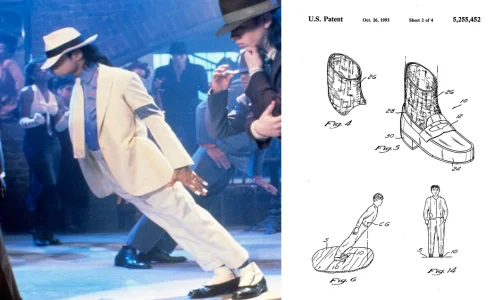
- He was a co-inventor. Michael Jackson held a US patent (No. 5,255,452) for the special anti-gravity shoes used in the “Smooth Criminal” video.
- He almost wasn’t named Michael. His mother Pattie had initially decided to name him “Jesse” before birth.
- He owned the Beatles’ catalog. After buying the ATV publishing catalog in 1985 for $47.5 million, he owned the rights to most Lennon-McCartney songs — a decision that eventually earned his estate $750 million when it was sold to Sony in 2016.
- His “Thriller” video cost $500,000 to make — a record budget for a music video in 1983 — and is still considered the greatest music video in history.
- He appeared on Sesame Street as a child. The Jackson 5 performed on the show in 1971.
- He was diagnosed with vitiligo and lupus. His dramatically changed skin tone in later years was attributed to vitiligo, confirmed by his autopsy.
- He had a pet chimpanzee named Bubbles. Bubbles traveled everywhere with Jackson throughout the 1980s and is now in an animal sanctuary in Florida.
- His Bad album had only 35 songs recorded, but could only fit so many. Several cuts — including “Smooth Criminal” and “Leave Me Alone” — were originally intended as B-sides.
- “Man in the Mirror” reached #1 without a music video. It was one of the rare Jackson singles to hit the top spot on radio play alone.
- His 1993 Super Bowl halftime show started with 90 seconds of silence. Jackson stood motionless on stage while the crowd screamed — and it remains one of the most iconic moments in Super Bowl history.
- His estate has earned more money than he ever did while alive. Since 2009, the estate has generated well over $3 billion in total.
- He self-taught himself to play multiple instruments — including keyboard, guitar, and drums — without formal lessons.
Michael Jackson’s Legacy
Jackson is one of the best-selling music artists of all time, with over 150 million units sold worldwide and five Diamond certifications from the Recording Industry Association of America (RIAA).
In April 2025, NetEase Cloud Music named Bieber as the most streamed European/American artist in the platform’s 12-year history — yet Michael Jackson remained the dominant figure in streaming of classic pop for the first half of 2026 following the release of the biopic, with Billie Jean alone scoring nearly 33 million streams in a single month.
His influence runs through virtually every major pop, R&B, and hip-hop artist of the past four decades — from Prince and Janet Jackson to Usher, Chris Brown, Justin Timberlake, Beyoncé, Bruno Mars, and the Korean pop industry itself, which has explicitly cited MJ’s visual performance style as a foundational influence.
Frequently Asked Questions
Where was Michael Jackson born?
Michael Jackson was born on August 29, 1958, in Gary, Indiana, USA — a working-class steel town south of Chicago. He grew up in a tiny two-bedroom house with eight siblings.
Where did Michael Jackson die?
Michael Jackson died at Ronald Reagan UCLA Medical Center in Westwood, Los Angeles, California, on June 25, 2009. He was 50 years old.
How did Michael Jackson die? What killed him?
He died of acute propofol and benzodiazepine intoxication. His personal doctor, Conrad Murray, administered the surgical anesthetic propofol as a sleep aid. Murray was convicted of involuntary manslaughter in 2011.
What happened to Michael Jackson in his final days?
He was rehearsing for the “This Is It” tour at Staples Center, suffering from severe insomnia. His doctor Conrad Murray administered propofol nightly. On June 25, 2009, he stopped breathing after a dose and could not be revived.
How old was Michael Jackson when he died?
Michael Jackson was 50 years old when he died on June 25, 2009. He was just weeks away from his comeback tour.
What is Michael Jackson’s best album?
Thriller (1982) is universally considered his best album and is the best-selling album of all time globally, with over 70 million copies sold.
What is the “Thriller” song about?
“Thriller” is a horror-themed pop song where Michael plays a character warning his girlfriend of monsters, zombies, and creatures of the night. The 14-minute music video, directed by John Landis, is the greatest music video ever made.
What were Michael Jackson’s most famous dance moves?
His signature moves include the Moonwalk (gliding backward while appearing to walk forward), the Robot, the Anti-Gravity Lean, the Toe Stand, and spinning pirouettes. He is widely considered the greatest dancer in pop music history.
Who were Michael Jackson’s parents?
His father was Joseph “Joe” Jackson, a strict but ambitious man who managed the family’s music careers. His mother was Katherine Jackson (née Scruse) — a gentle, nurturing woman who remains deeply loved by the family and public.
Who are Michael Jackson’s siblings?
MJ had eight surviving siblings: Rebbie, Jackie, Tito, Jermaine, La Toya, Marlon, Randy, and Janet Jackson. Brandon, Marlon’s twin, died shortly after birth.
Who did Michael Jackson marry?
MJ married twice: Lisa Marie Presley (daughter of Elvis Presley) from 1994–1996, and nurse Debbie Rowe from 1996–1999. Both marriages ended in divorce.
What was Michael Jackson’s relationship with Lisa Marie Presley?
They married in May 1994, months after MJ settled the first child abuse allegations. The marriage lasted less than two years. Lisa Marie maintained she genuinely loved him. She died in January 2023 at age 54.
How many children did Michael Jackson have?
Three: Prince (son, born 1997), Paris (daughter, born 1998) — both with Debbie Rowe — and Bigi (formerly Blanket, born 2002) via an anonymous surrogate.
What was Michael Jackson’s net worth?
At death, MJ had roughly $500 million in debt but over $567 million in assets, making him technically insolvent in cash. His estate is now worth an estimated $2–2.5 billion as of 2025.
What happened to Neverland Ranch?
It was sold in 2020 to billionaire Ron Burkle for $22 million — far below the $100M asking price. It was renamed Sycamore Valley Ranch and is no longer associated with the Jackson estate.
What happened to Michael Jackson’s assets after death?
His estate sold the Sony/ATV catalog stake for $750M in 2016 and half his Mijac Music catalog for $600M in 2024. The estate has generated over $3 billion since his death and continues earning $100M+ annually.
What was the “This Is It” tour?
A planned 50-concert London residency at the O2 Arena in 2009 — his first major concerts in over a decade. All dates sold out immediately. He died before performing a single show. A documentary of the rehearsals was released posthumously, grossing $261 million.
What documentaries have been made about Michael Jackson?
Key documentaries include: Living with Michael Jackson (2003, Martin Bashir), This Is It (2009, concert film), Leaving Neverland (2019, HBO), and the 2026 biopic Michael, directed by Antoine Fuqua and starring MJ’s nephew Jaafar Jackson.
Who plays Michael Jackson in the 2026 biopic?
Jaafar Jackson — son of Jermaine Jackson and Michael’s real-life nephew — stars in the film Michael (2026), directed by Antoine Fuqua. The film became the highest-grossing music biopic of all time.
Was Michael Jackson found guilty of child molestation?
No. Michael Jackson was acquitted on all 14 counts on June 13, 2005, following a five-month criminal trial. He was never convicted of any crime. Allegations and the subsequent documentary Leaving Neverland (2019) remain deeply contested.
What awards did Michael Jackson win?
He won 13 Grammy Awards (including 8 in one night for Thriller), 26 American Music Awards, 22 MTV Europe Music Awards, and was inducted into the Rock and Roll Hall of Fame twice. He holds Guinness records as the most successful entertainer of all time.
Why is Michael Jackson called the King of Pop?
The title was popularized in the early 1990s and reflects his unmatched dominance of popular music from the late 1970s through the 1990s — in sales, chart performance, cultural influence, live performance, and music video innovation. No other artist has come close to matching his overall commercial and cultural impact.
What was MJ’s signature glove?
Michael Jackson famously wore a single crystal-studded white glove, which he first debuted on the Motown 25 special in 1983. He said he wore one glove because “two gloves was boring” — and because it drew attention to his hand movements during the moonwalk.
What race or ethnicity was Michael Jackson?
Michael Jackson was African-American. His dramatic skin lightening in later years was attributed to vitiligo — an autoimmune condition that destroys skin pigmentation — confirmed by his autopsy.
How old would Michael Jackson be today?
Michael Jackson, born on August 29, 1958, would be 67 years old today. His legacy as the King of Pop continues to inspire generations worldwide.
Explore More Michael Jackson Stories
Bookmark Michael Jackson to stay up to date with the latest news, analysis, and stories about the King of Pop. New articles are added regularly as his story continues to unfold.