Haunted house movies have captivated audiences for generations, combining atmospheric dread with the intimacy of a familiar setting turned sinister. The home, typically our sanctuary, transforms into a character itself—breathing, watching, and waiting. Whether it’s creaking floorboards, inexplicable shadows, or the presence of unseen entities, these films explore our primal fear of the unknown lurking within our own walls. From black-and-white classics to contemporary masterpieces, haunted house movies continue to be a cornerstone of horror cinema.
1. The Uninvited (1944)
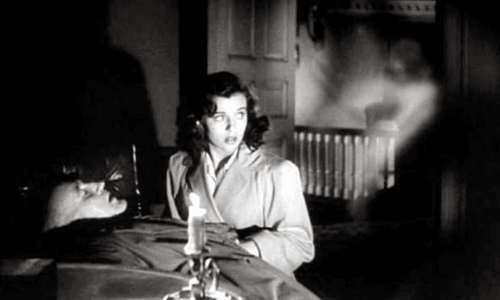
This pioneering haunted house movie follows siblings who inherit a seaside mansion on the Cornish coast, only to discover it harbors a tragic, vengeful spirit. The house’s tragic past becomes intertwined with the present as ghostly phenomena intensify, particularly affecting the female lead through possessions and supernatural visions. The elegant, gothic structure serves as the perfect backdrop for psychological terror, blending mystery with deep emotional wounds. The film’s exploration of the house as a repository of unresolved trauma set the template for countless haunted house stories to follow.
2. House on Haunted Hill (1959)
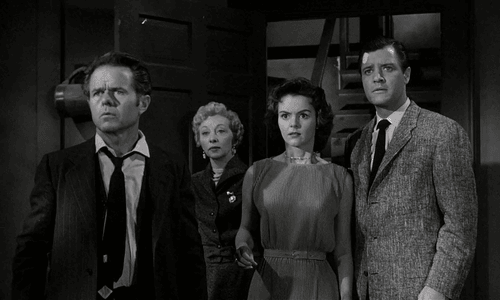
An eccentric millionaire invites five strangers to spend the night in a sprawling mansion filled with mysterious deaths, with a fortune at stake for anyone who survives until dawn. The house, designed with deliberately hidden passages and macabre architecture, becomes a labyrinth of fear where every shadow could conceal either a ghost or human deception. Secret rooms and elaborate trap doors make it impossible to distinguish between genuine horror activity and psychological manipulation. The building itself, with its grim history and deliberate design to unsettle, transforms the structure into the true antagonist of the story.
3. The Innocents (1961)
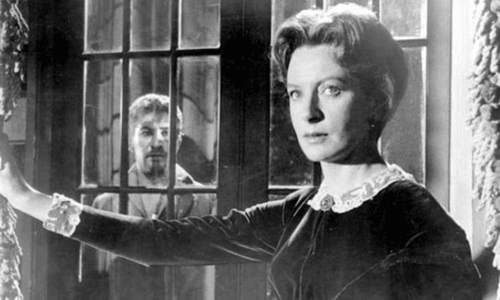
A governess accepts a position at a sprawling English estate, only to become convinced that two children in her care are being haunted by the ghosts of previous household members with sinister intentions. The grand mansion becomes a prison of ambiguity where reality and psychological delusion blur throughout the narrative. With its isolated countryside location and vast, shadowy corridors, the house amplifies the governess’s growing paranoia and obsession.
4. The Haunting (1963)
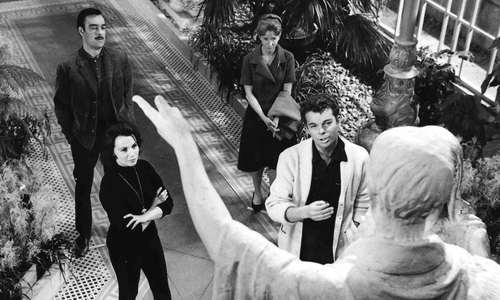
A team of paranormal investigators moves into Hill House, an architecturally impossible structure with a long history of madness and death, to document supernatural phenomena. The house itself seems almost alive, with its geometry designed to unsettle and its previous owners driven to violence and suicide. The building’s dark corridors and impossible angles create a sense of psychological oppression that affects every character who enters. The structure’s deliberate architectural peculiarities become extensions of its haunted nature, making the house itself the source of terror rather than any individual ghost.
5. The Legend of Hell House (1973)
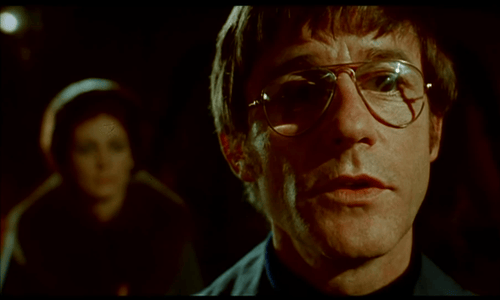
A team of psychics and scientists enters Belasco House, one of the most actively haunted residences in the world, to prove the existence of phenomena through scientific investigation. The sprawling mansion, built by an eccentric millionaire who conducted bizarre rituals within its walls, emanates overwhelming psychic energy from every room. The house’s reputation precedes it, with previous investigation teams having experienced violent deaths and psychological breakdowns. The building becomes a fortress of unnatural activity where every investigation only deepens the mystery of what entities reside within its walls.
6. The Amityville Horror (1979)

A family moves into a beautiful Dutch Colonial house on Long Island, unaware of its dark history involving mass murder, only to experience escalating violence and psychological manipulation from the malevolent entity residing there. The iconic house with its distinctive windows, which resemble eyes watching the surroundings, becomes a character embodying pure evil and possession. The structure actively antagonizes the family through plumbing failures, basement phenomena, and direct attacks that leave no room for doubt. The house’s appetite for destruction grows throughout the film, turning a dream home into a nightmare of escalating terror.
7. The Shining (1980)
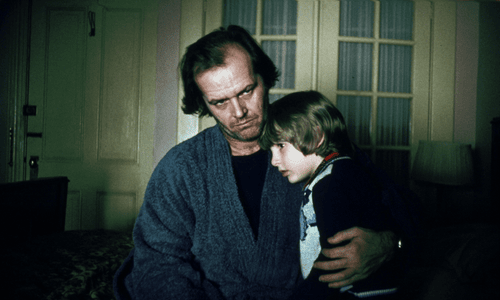
During a snowed-in winter at an isolated mountain resort hotel, a family isolated becomes trapped within the Overlook Hotel as supernatural forces manipulate the father’s sanity while ghostly guests interact with the young son. The sprawling hotel, with its maze-like corridors, haunted ballroom, and blood-soaked history, becomes a character of pure malevolence. The building’s past atrocities—including murders and inexplicable tragedies—permeate every room and hallway. The hotel’s isolation in the mountains amplifies its malignant influence, trapping occupants in a place where the boundaries between the living and dead dissolve completely.
8. The Changeling (1980)
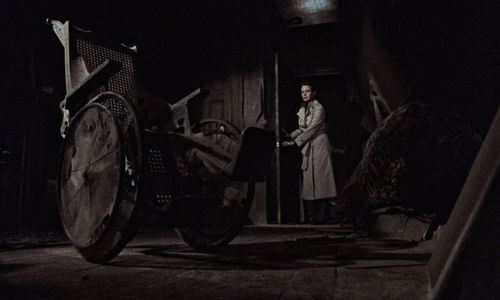
A grieving composer moves into a restored Victorian mansion to escape his past, only to encounter the troubled spirit of a child who died under mysterious circumstances within the house’s walls decades earlier. The stately, architecturally significant house becomes a monument to tragedy, with its elegant rooms concealing dark secrets from the past. The structure itself seems to aid the ghost in communicating through unexplained sounds, mysterious paintings, and deliberate physical phenomena. The grand piano, hidden rooms, and period architecture lend the house authenticity as a place where unresolved death continues to demand acknowledgment.
9. Poltergeist (1982)
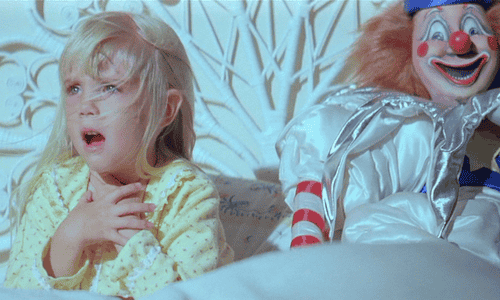
A suburban family discovers their home is built over a Native American cemetery and becomes terrorized by angry spirits that escalate from playful phenomena to violent hauntings, ultimately opening a portal between worlds. The seemingly normal suburban house, with its quiet neighborhood setting and middle-class architecture, becomes a battleground between the living and the dead. The house itself serves as the gateway to another dimension where the spirits seek vengeance for the desecration of their burial ground. This violation of the family’s sanctuary demonstrates how even the most ordinary homes can become sites of terror when built on cursed ground.
10. Beetlejuice (1988)
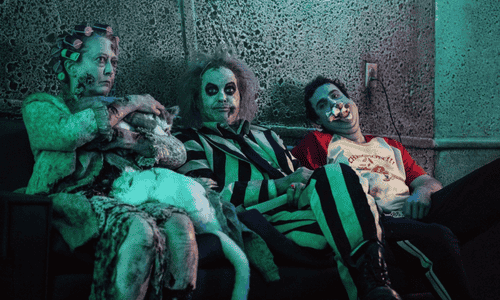
A recently deceased couple finds their own house inhabited by the living family that purchased their property, leading them to hire an eccentric, mischievous ghost named Beetlejuice to scare the newcomers out. The house becomes a contested space between the living and the dead, with both sides attempting to claim ownership and control. The film playfully explores the concept of a haunted house from the perspective of the original occupants, making it clear that hauntings represent unfinished business and emotional attachment to place. The quirky aesthetic of the house and its haunting becomes darkly comedic rather than purely terrifying.
11. The Haunting (1999)
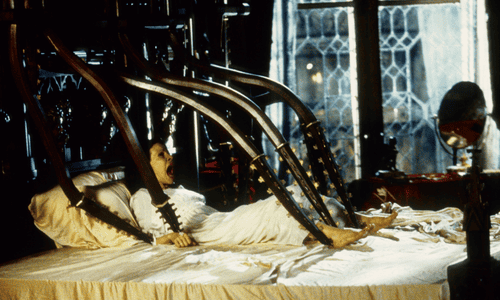
A remake of the classic 1963 film, this version emphasizes visual spectacle as a team of researchers enters Hill House, an architecturally twisted structure built by a textile magnate obsessed with immortality through torture and experimentation. The modern rendering uses CGI to show the house as an almost sentient entity, with walls that shift, floors that defy gravity, and architectural impossibilities that prey on human psychology. The mansion’s dark history of unethical experiments creates residual psychic energy embedded in every stone and corner. The house becomes a manifestation of accumulated suffering, rooted in past cruelty and the human screams that echo through its corridors.
12. House on Haunted Hill (1999)
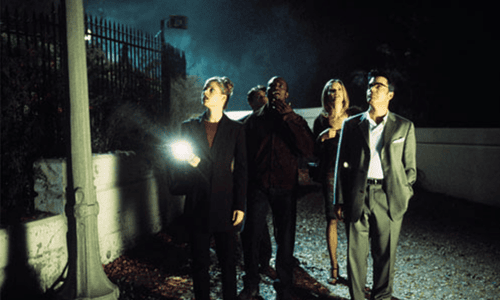
A remake of the original 1959 film, this version relocates the haunted gathering to the abandoned Harrington House, a former psychiatric hospital with a horrifying history of unethical experiments and patient deaths. The decaying institutional building, with its medical apparatus and padded cells, becomes a character as deadly as any individual ghost. The structure’s history of torture and murder perpetuates throughout the film. The building’s clinical, imposing architecture reflects the horrors that occurred within, making the house itself a victim and perpetrator of violence simultaneously.
13. The Others (2001)
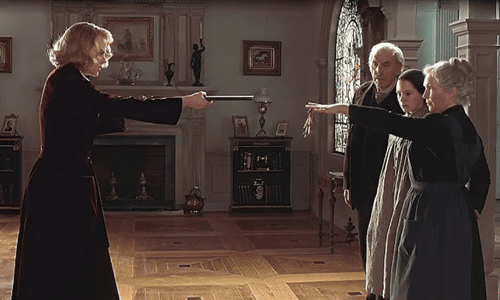
A mysterious governess arrives at a sprawling English mansion to care for two photophobic children who may or may not be alive, leading to a twisted revelation about the house and its occupants’ true nature. The elegant, light-filled manor with its closed shutters and isolation becomes a purgatorial space where reality unfolds in unexpected ways. The house’s pristine architecture and seemingly peaceful rooms mask a tragedy that defines the entire narrative structure. The atmospheric tension of the film emerges from the house itself—its emptiness, its silence, and the way its rooms seem to observe rather than shelter those within.
14. Thir13en Ghosts (2001)
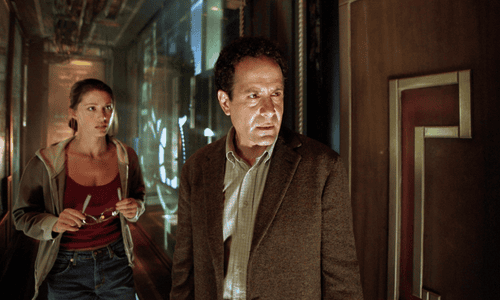
A grieving family inherits a house that is actually an elaborate trap designed by a powerful warlock to capture thirteen specific ghosts needed for a ritual. The architectural wonder, with its glass walls, labyrinthine design, becomes a puzzle box containing imprisoned spirits. The house transcends being merely haunted; it is actively engineered to channel and contain supernatural energy. The structure’s modern design contrasts sharply with the ancient forces trapped within its walls, creating a dynamic tension.
15. Paranormal Activity (2007)
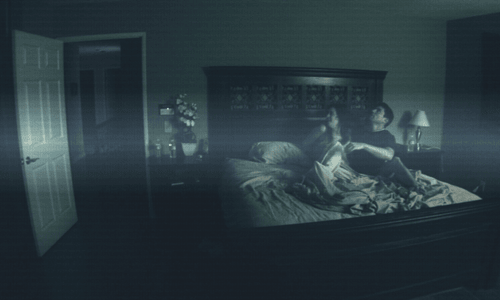
A young couple experiences escalating supernatural phenomena in their suburban home, captured entirely through security cameras, as an unseen malevolent presence makes its intentions increasingly clear. The ordinary bedroom, living room, and kitchen become battlegrounds where the invisible entity manipulates reality with poltergeist-like activity. The found-footage format emphasizes the inescapability of the haunting—the couple cannot flee what haunts their own home.
16. Insidious (2010)
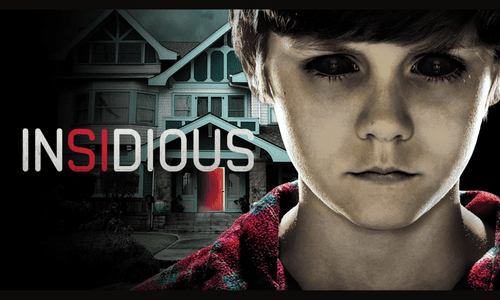
A family discovers their son has entered a comatose state due to his connection to “The Further,” an astral realm of haunted locations, with their own house serving as a portal for demonic entities seeking to possess his body. The family home becomes a gateway to nightmare spaces where demons and tortured spirits roam unchecked. The seemingly normal house conceals depths, both literally and figuratively, in its walls and spaces. The haunting represents the family’s failure to protect their son from forces that transcend physical reality, making the house complicit in the possession.
17. Sinister (2012)
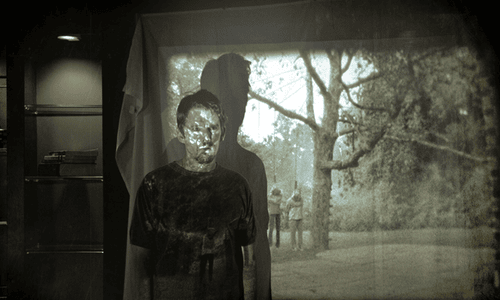
A true-crime novelist discovers his new home was the site of mysterious family murders, and begins experiencing supernatural horror as a malevolent entity connected to the crime scene pursues him and his family. The modest house conceals one of its previous owner’s darkest secrets, documented in found footage that unleashes forces. The building becomes a repository of trauma and violence, with its innocent appearance masking horrors committed within. It intensify as the protagonist uncovers more details, suggesting the entity feeds on human knowledge and investigation of its crimes.
18. The Conjuring (2013)
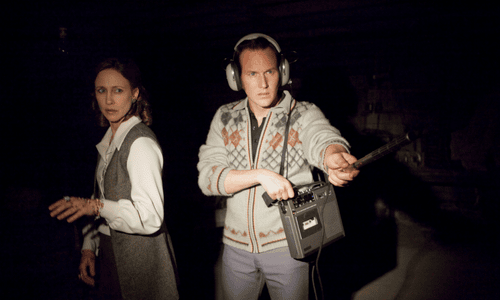
Paranormal investigators Ed and Lorraine Warren arrive at a farmhouse where a family is terrorized by a malevolent entity and the ghosts of previous victims, uncovering a complex history of witchcraft and possession. The isolated farmhouse, built on land with a dark history, becomes the focal point of escalating poltergeist activity and demonic possession. The structure’s history of violence and occult practices permeates the property, affecting all who inhabit it. The warren’s investigation reveals the house as a nexus point for supernatural convergence where multiple entities and traumas have accumulated over generations.
19. The Conjuring 2 (2016)
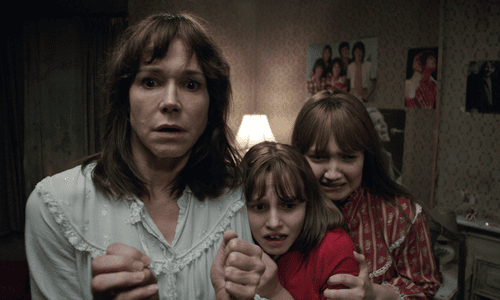
The Warrens are called to London to investigate a haunting in a working-class home where a widow and her four children are plagued by the aggressive spirit of an old man who refuses to leave the house. The modest London townhouse becomes a battleground between the spirit’s determination to remain and the family’s desperate attempts to reclaim their home. The entity’s powerful attachment to the structure creates phenomena that endanger the family’s safety while defying conventional exorcism attempts. The investigation reveals the spirit’s obsession with claiming the house stems from deep emotional trauma and unfinished business.
20. Crimson Peak (2015)
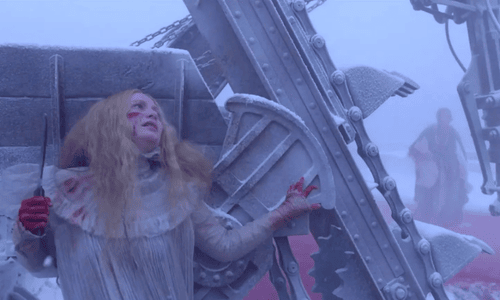
A young author moves into a decaying Gothic mansion with her new husband, only to discover the house harbors dark family secrets, jealous ghosts, and a plot to exploit her fortune. The sprawling Victorian estate, with its grand staircases, shadowy ballrooms, and crumbling architecture, becomes a character as important as any human inhabitant. The mansion’s gothic beauty masks predatory intentions and supernatural vengeance, with its very walls seeming to conspire against the protagonist. The haunting becomes a manifestation of family sins, suggesting the house remembers every act of cruelty and betrayal committed within.
21. His House (2020)
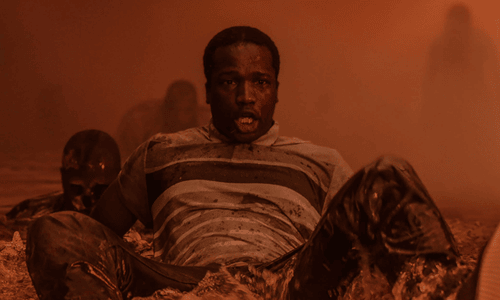
A refugee couple begins to experience horror in their new council house, though the “haunting” proves to be a manifestation of their trauma from their past, blending psychological horror with social commentary. The modest government housing becomes a space where their internal horror manifests externally as the house itself seems to turn against them. The haunting reflects the couple’s inability to escape the psychological weight of their escape from violence and loss. The structure becomes a prison of guilt and unresolved trauma, with its supernatural elements embodying both literal paranormal threat and psychological breakdown.
22. The Innkeepers (2011)
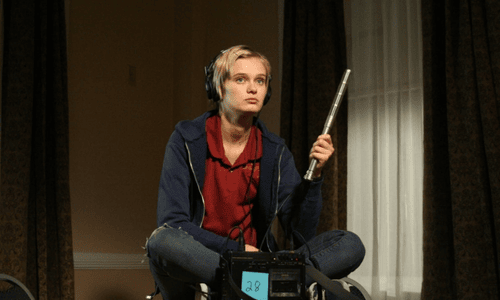
The last employees of a declining New England hotel spend their final nights working at the supposedly haunted establishment, attempting to document paranormal activity before the building closes forever. The aging hotel, once grand but now deteriorating, contains the accumulated presence of guests from decades past. The building’s history of habitation and the lives lived within its walls create layers of residual hauntings. The final night becomes an encounter with the most powerful entity the hotel harbors, suggesting some spirits remain bound to places indefinitely.
23. Winchester (2018)
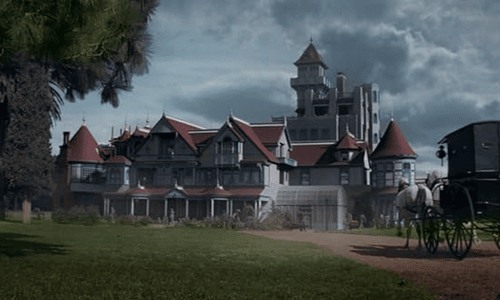
Based on the real-life Winchester Mystery House, this film fictionalizes the story of Sarah Winchester, who continuously builds and renovates her mansion to appease the ghosts of those killed by Winchester rifles. The architectural marvel becomes a labyrinth intentionally designed to confuse and contain spirits, with thousands of rooms, staircases leading nowhere, and passages that defy logic. The house’s ongoing construction reflects the protagonist’s obsessive attempt to maintain control over the forces haunting her. The building transforms into a living monument to guilt, with each addition representing an attempt to atone for past violence.
24. Ouija: Origin of Evil (2016)
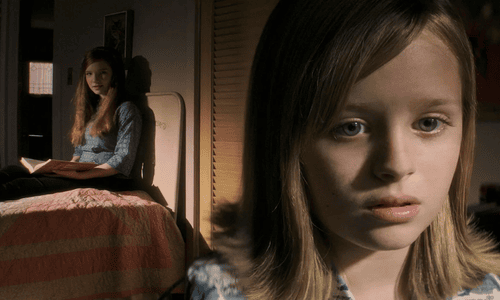
A widow and her daughters move into a new home and use a Ouija board, inadvertently opening a portal that allows demonic entities to threaten the family through the house’s various rooms and spaces. The seemingly welcoming family home becomes a dangerous gateway to another realm through the careless use of a supernatural tool. The entity uses the house’s physical structure to manifest and attack, turning familiar spaces into sites of danger. The haunting demonstrates how inviting attention into a home can transform it from sanctuary to battleground.
25. Don’t Be Afraid of the Dark (2010)
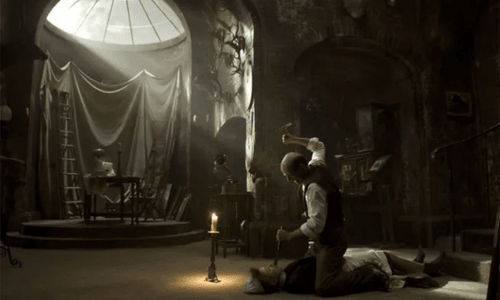
A young girl moving into a renovated mansion discovers that malevolent creatures inhabit the sealed basement, leading to escalating supernatural horror as the entities attempt to add her to their collection. The elegant mansion with its renovated modernness conceals ancient supernatural forces dwelling beneath in the sealed ash pit. The creatures’ connection to the house’s foundations suggests evil antecedes human occupation of the structure. The renovation that opened sealed passages releases imprisoned entities, showing how even well-intentioned improvements can unleash dormant forces.
26. The Woman in Black (2012)
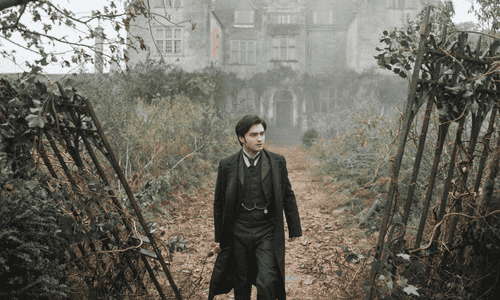
A young solicitor travels to a remote mansion to settle the estate of a recently deceased widow, only to confront the vengeful ghost of a woman who died at the property and continues to claim victims. The sprawling Victorian mansion, isolated on a marshland peninsula, becomes a trap for anyone who encounters the woman’s ghost. The structure’s isolation and the woman’s powerful attachment to it create an inescapable presence. The haunting punishes those who intrude on the house’s mysteries, suggesting some hauntings are fundamentally tied to territory the spirit will defend eternally.
27. Burnt Offerings (1976)
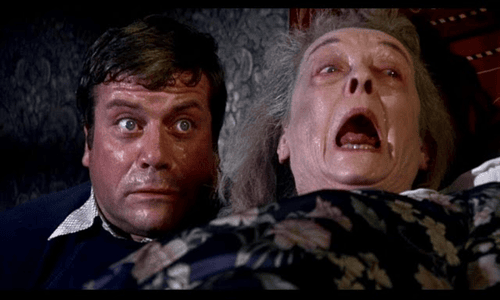
A family rents a mansion for the summer at an unusually low price, only to discover the house itself feeds on the family members’ life force to maintain its appearance and power. The decaying mansion conceals a supernatural parasitism where the structure actively sustains itself by draining those who live within. The house’s hunger intensifies throughout the summer, suggesting properties can become malevolent entities unto themselves. The narrative reveals that some houses don’t merely harbor ghosts but constitute sentient supernatural forces designed to exploit human inhabitants.
28. Hell House LLC (2015)
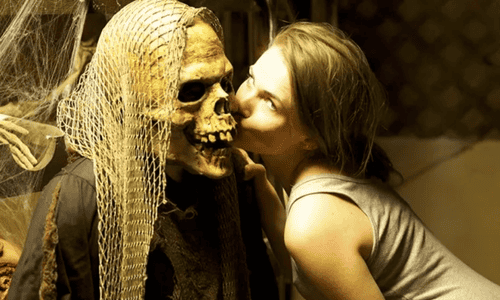
A found-footage film following a documentary crew investigating a crew of haunted house attraction workers who experienced unexplained deaths while setting up an elaborate display in an abandoned hotel. The derelict hotel’s pre-existing hauntings interfere with the attraction’s construction, creating a collision between artificial scares and genuine activity. The building’s history of guest deaths and tragedies creates a residual haunting that the crew awakens through their preparations. The distinction between staged horror and authentic supernatural horror blurs as the hotel’s real entities prove far more dangerous than any artificial attraction.
29. The House of the Devil (2009)
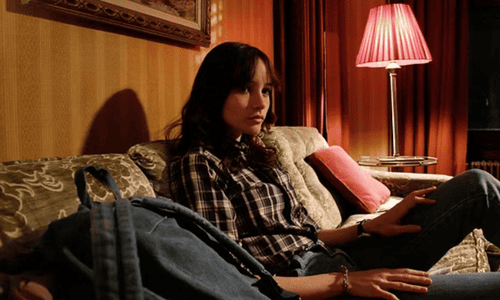
A college student accepts a lucrative babysitting job that places her in a remote mansion occupied by a family engaging in Satanic rituals, with the house and its contents becoming weapons against her. The sprawling period mansion transforms into a literal hell-house where occult practices have corrupted the structure with demonic energy. The building’s isolated location and deliberate design for ritual purposes make it a conduit for forces. The protagonist discovers the house itself is part of a larger conspiracy, with its architecture and layout intentionally arranged for dark purposes.
30. The Sentinel (1977)

A woman discovers her new apartment in a quiet New York City building is the gateway to hell, with her home situated at the nexus between the living and damned worlds. The unassuming residential building, nestled among normal city structures, conceals its role as a barrier between dimensions. The apartment becomes dangerous because of what it facilitates rather than individual ghosts within it. The haunting suggests that some buildings hold cosmic significance beyond their apparent purpose, serving as essential infrastructure.
31. A Haunting in Venice (2023)

Hercule Poirot investigates paranormal phenomena at a grand mansion in Venice where a widow claims her home is haunted by the spirit of her daughter. The opulent Venetian palazzo becomes the backdrop for investigating whether unnatural occurrences or human deception drive the apparent haunting. The building’s gothic beauty and Venetian architecture create atmosphere around mysteries that may be psychological. The investigation into the mansion’s true nature drives the mystery, with the house itself holding secrets about family betrayal and hidden cruelty.
Why haunted house movies never get old? Because everyone knows what a home should feel like — safe. So when the halls echo with whispers, doors slam by themselves, or a family photo moves an inch… the terror hits deeper.