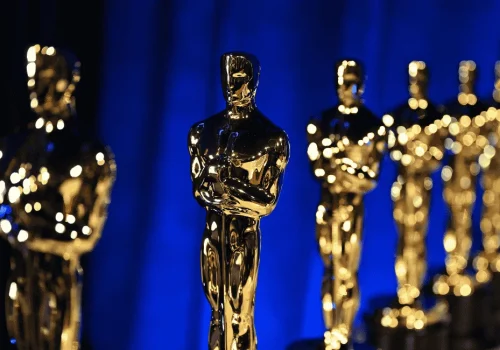
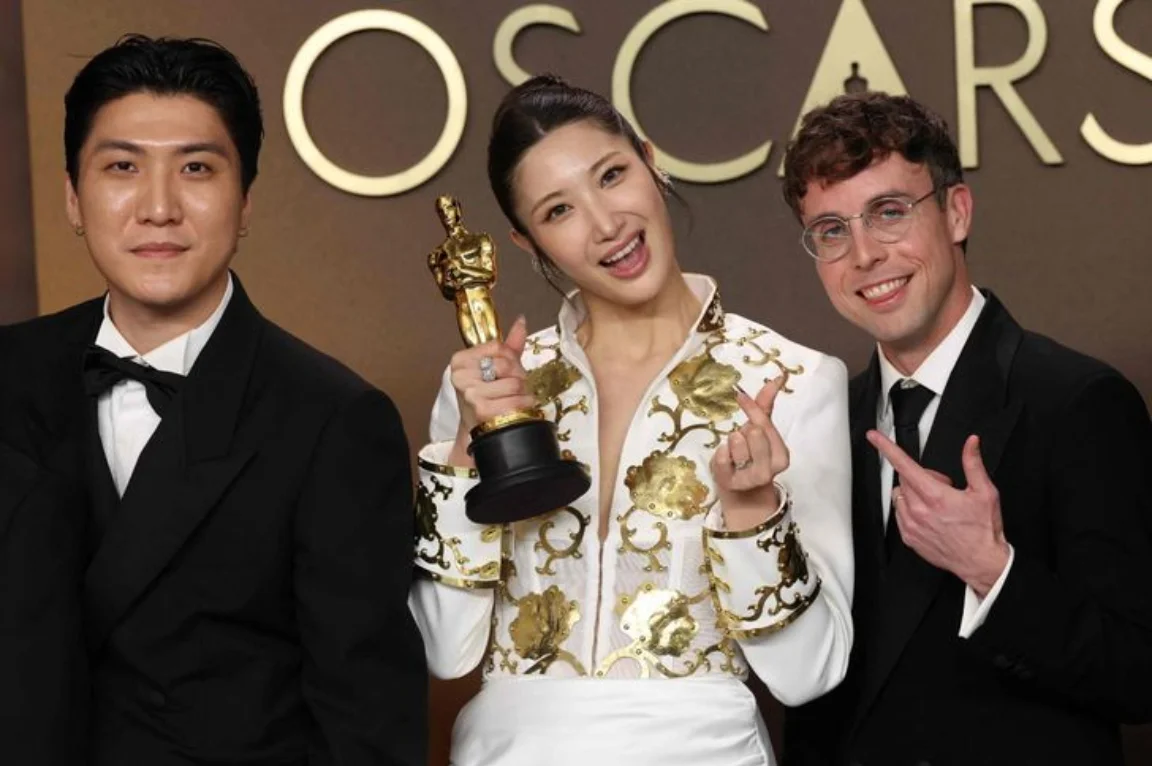
Hollywood history was rewritten on Sunday night as Netflix’s animated powerhouse, K-Pop Demon Hunters, secured two massive victories at the 98th Academy Awards. In a night filled with emotional milestones, the film cemented its legacy by taking home the trophies for Best Animated Feature and Best Original Song.
The landmark double win officially makes the breakout anthem, “Golden,” the first-ever K-pop track to win an Oscar. This achievement highlights the soaring global dominance of South Korean culture, proving that the “Hallyu” wave has now fully conquered the Academy.
A Night of Historic Firsts
The atmosphere at the Dolby Theatre briefly transformed into a vibrant K-pop arena. Performers EJAE, Audrey Nuna, and Rei Ami delivered a high-octane live rendition of “Golden,” accompanied by traditional Korean percussionists.
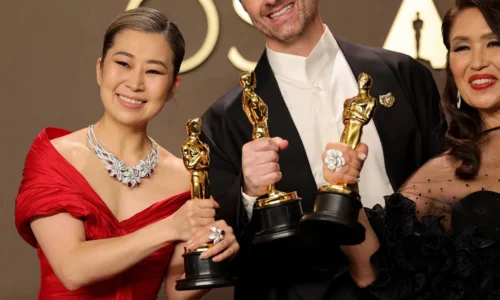
The emotional peak of the evening came when director Maggie Kang took the stage alongside co-director Chris Appelhans and producer Michelle L.M. Wong. Accepting the award for Best Animated Feature, Kang delivered a tearful speech dedicated to the next generation of Asian creators.
“For those of you who look like me, I’m so sorry it took so long to see us in a movie like this, but it is here,” Kang said. “This is for Korea and Koreans everywhere.”
With this win, Kang and Wong made history as the first Asian women to ever win in this category.
From Streaming Hit to Academy Gold
Since its debut, K-Pop Demon Hunters has been an unstoppable cultural juggernaut. The film follows the fictional girl group HUNTR/X, who must balance their grueling lives as global pop idols with their secret identity as a legendary line of demon slayers.
The film’s win followed a dominant awards season where it swept the Golden Globes and the Annie Awards, ultimately beating out Disney’s Zootopia 2 and Pixar’s Elio.
As the Kpop Demon Hunters win two Oscar trophies, the message to the industry is clear: the blend of Korean mythology and modern pop culture is no longer just a trend—it’s an award-winning standard. With a sequel already greenlit by Netflix, the hunt is only just beginning.