
In a stunning return to the spotlight, Stephen Colbert emerged furious, unapologetic, and combative — not just about his “The Late Show” cancellation, but also about what it represents in today’s media landscape. This wasn’t your usual late-night banter. Colbert went full throttle, declaring the gloves are off, targeting Donald Trump and Paramount with razor-sharp conviction.
Colbert Sounds the Trump Alarm
Colbert lashed out at Trump for his gleeful celebration of the cancellation and didn’t hold back: “Go fuck yourself,” he declared on air, citing Paramount’s rumored $16 million payout to Trump in that blockbuster “60 Minutes” settlement . He quipped that perhaps his stand-up “moustache” was too much for network execs — he called this incident “stachism.”
Solidarity in Late-Night Ranks
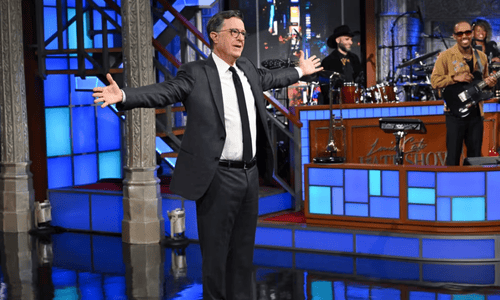
Late-night peers rallied behind him. John Oliver, Seth Meyers, and Jon Stewart each appeared on Monday night’s episode — a show of unity from the frontlines of comedy . Stewart later called out Paramount for “trying to censor and control its hosts” in a blistering monologue . Outside the Ed Sullivan Theater, supporters held up signs reading, “Colbert stays! Trump must go!”
Was It Money — or Merger Pressure?
CBS cited poor financial returns (a $40–50 million annual loss) as the reason for the cancellation . But insiders wonder if political calculations — especially the looming $8 billion Skydance merger requiring Trump-era FCC approval — played a more sinister role . Colbert himself pointed out the mysterious $16 million unaccounted for, hinting it was the cost of telling the truth.
Why This Matters
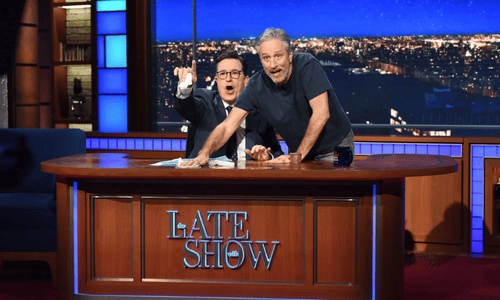
This moment is more than a career crossroads — it’s a cultural blow. “The Late Show” cancellation signals a retreat from fearless satire that once defined network TV. Colbert’s final months at CBS will surely be memorable, but the long-term message is chilling: outspoken voices may face corporate silencing.
What’s Next?
Colbert’s future remains bright, though uncertain. Industry insiders suggest he might pivot to producing, podcasts, or a more independent platform. Whatever form that takes, one thing is clear: he’s not done fighting — and he’s not backing down.
The swirling mix of political influence, financial decisions, and creative control paints a grim picture for late-night comedy. Colbert didn’t just lose a show — we lost a vital platform that held power to account. And silence isn’t going to disguise that fact.