
We met Dakota Johnson as Anastasia Steele—the soft-spoken outsider pulled into a world of power, desire, and control. But long before that role took over pop culture, Dakota had already been living inside a version of Hollywood most people only see from the outside.
And the funny part? She’s spent her entire career quietly resisting the version of her the industry tried to lock in.
Growing Up Where Fame Was the Family Business
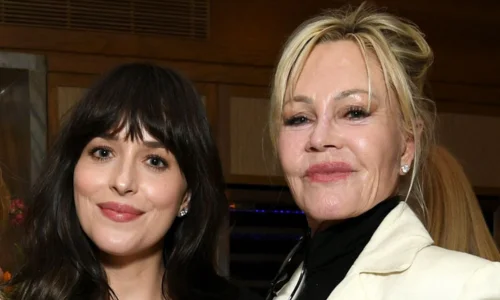
Dakota Johnson didn’t chase fame—it was already in the room.
Born to Melanie Griffith and Don Johnson, she grew up in a household where scripts, cameras, and public attention were part of everyday life. But that kind of upbringing doesn’t always create confidence—it creates awareness. Early on, Dakota saw both sides of the spotlight: the admiration and the pressure, the success and the fallout.
A Childhood Split Between Sets and Self-Discovery
Her early years were anything but typical. Moving between schools and spending time on film sets, Dakota’s education didn’t just come from classrooms—it came from watching how the industry actually works.
By the time she stepped into acting, it didn’t feel like a leap. It felt like stepping into something she already understood.
The Break That Changed Everything (And Almost Boxed Her In)
For a while, Dakota Johnson’s career moved quietly. Small roles, brief appearances—nothing that screamed “next big thing.”
And then came Fifty Shades of Grey.
Overnight, she became a global name. The kind of fame that’s loud, invasive, and impossible to ignore. But it also came with a catch—being defined by a single role.
When Fame Gets Too Specific
The Fifty Shades era could have easily locked her into a very narrow space in Hollywood. And for a moment, it looked like it might.
But Dakota didn’t follow the obvious path.
Instead of leaning into similar roles, she pivoted—hard.
The Quiet Rebellion in Her Film Choices

Rather than chasing blockbusters, Dakota Johnson started choosing projects that felt… different.
Films like Suspiria and The Peanut Butter Falcon showed a completely different side of her—one that wasn’t about glamour or shock value, but about texture, emotion, and risk.
Hits, Misses, and the Power of Not Playing Safe
Not every project landed commercially—and that’s exactly the point.
Dakota’s career isn’t built on constant wins. It’s built on interesting decisions. Some films faded, some sparked conversation, but all of them pushed her further away from being predictable.
And in Hollywood, that’s a strategy in itself.
Love, Privacy, and a Relationship That Refuses to Be Loud

If her career is carefully curated, her personal life is even more so.
Dakota Johnson and Chris Martin: Low-Key, High Curiosity
Her relationship with Chris Martin has been one of the most talked-about yet least exposed romances in Hollywood. No oversharing. No constant headlines. Just enough appearances to keep people guessing.
It’s a dynamic that mirrors Dakota perfectly—visible, but never fully accessible.
Not Quite Controversial—But Never Boring
Dakota Johnson isn’t known for scandals, but she’s definitely had her moments. Her dry humor, unexpected honesty, and slightly unpredictable interview style have made her stand out in a sea of media-trained responses.
She doesn’t try to control every narrative—and that’s exactly why people keep watching.
More Than Acting: Power Moves Behind the Scenes

Dakota isn’t just showing up on screen anymore—she’s shaping what happens behind it.
Producing, Building, Expanding
With her production company, she’s stepping into a space where she gets to choose the stories, not just act in them. It’s a shift that signals something bigger—control.
And in an industry like Hollywood, control is everything.
Money, Influence, and Brand Value
Her net worth reflects a steady, strategic climb rather than overnight spikes.
| Aspect | Details |
| Estimated Net Worth | $14–15 million (approx.) |
| Income Sources | Films, production, brand deals |
| Influence Style | Subtle, fashion-forward, selective |
She’s not everywhere—and that’s exactly what keeps her valuable.
What’s Next for Dakota Johnson?
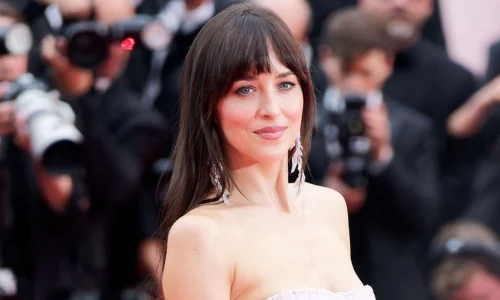
Leaning Into Stories That Actually Matter
Dakota Johnson’s upcoming projects continue to follow the same pattern—character-driven, slightly unconventional, and far from predictable.
She’s not chasing trends. She’s building a body of work.
Beyond the Screen
Off-camera, she keeps things just as intentional. Whether it’s supporting causes quietly or maintaining a life that doesn’t feel overly manufactured, Dakota’s approach to fame feels… controlled.
Not distant. Just deliberate.
The Dakota Johnson Effect
Dakota Johnson didn’t reinvent herself overnight.
She didn’t dramatically break away from her image or loudly demand to be taken seriously.
She just kept choosing differently—until people had no choice but to see her differently.
And maybe that’s her real power.
Not the roles. Not the headlines.
But the fact that in an industry built on noise… she made subtlety impossible to ignore.